Dar Si Hmad for Development, Education and Culture is an independent nonprofit organization founded in 2010 promoting local culture and sustainable initiatives through education and the integration of scientific ingenuity in Southwest Morocco. We operate North Africa's largest fog harvesting project, providing villages with access to potable water. Our Water School and Girls' E-Learning Programs build capacity in the Anti-Atlas Mountains. Through our Ethnographic Field School, researchers and students engage with local communities in Agadir, Sidi Ifni, and the rural Aït Baamrane region for meaningful cross-cultural exchange.

Showing posts with label gender. Show all posts

Wednesday, October 10, 2018

Learning Across Continents: America sharing knowledge with Africa


Written by DSH Fellow Katie Tyler

Katie is a recent graduate from Princeton and a fellow of Labouisse Fellowship. She is working with Dar Si Hmad on the capacity building project for NGO's .
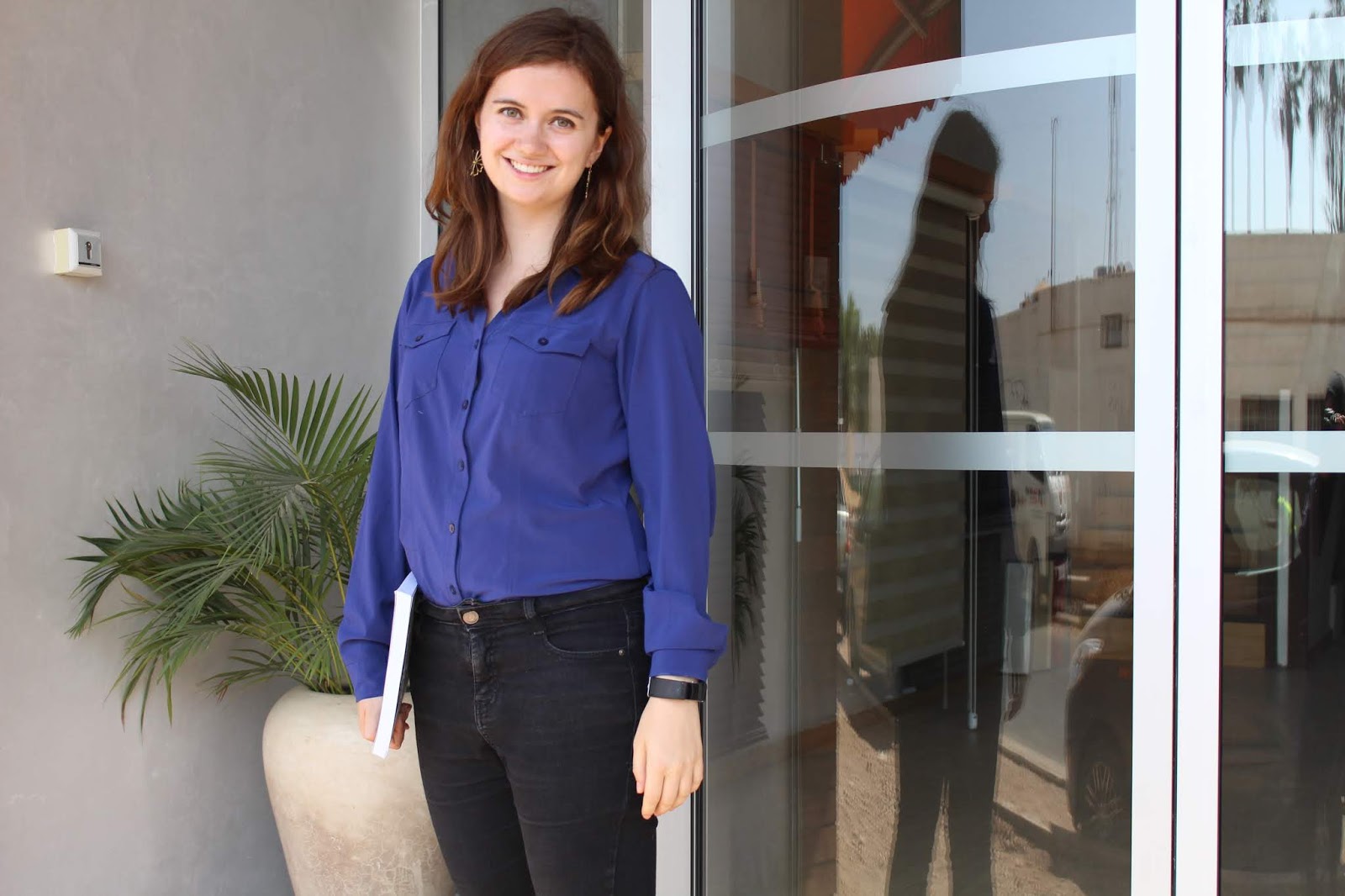
Dar Si Hmad Intern Katie Tyler
A little more than five years ago, I found out that I had received the opportunity of a lifetime. Thanks to the National Security Language Initiative for Youth (NSLI-Y), I had been awarded a scholarship to study Arabic in Marrakech. I had never lived outside of the U.S. before, and I was excited for the chance to be immersed in studying a foreign language. At the end of my six-week experience, I was able to speak Modern Standard Arabic a little better, but I wanted to continue improving my language skills.
When I entered college the following year, I knew that I wanted to continue studying Arabic and different cultures of the Middle East and North Africa. Becoming a Near Eastern Studies (more commonly known as Middle Eastern Studies) major at Princeton University was an obvious choice for my course of study.
During my third year of college, I spent a year writing an independent research paper the reconstruction of Agadir after the 1960 earthquake. Reading books about Moroccan history and newspaper archives from Agadir reminded me of how much I missed living in Morocco. Based on my experiences interning at a youth homeless shelter in Newark, New Jersey, I also knew that I wanted to gain more experience in working with nonprofit organizations that fight poverty. 
A mosque in Agadir (Taken by Katie)
I was lucky enough to attend a university that is able to support my career aspirations to work in sustainable development abroad. I am able to work in Agadir with Dar Si Hmad thanks to the Labouisse Fellowship, named after Princeton alum Henry R. Labouisse, who was most notably awarded a Nobel Peace Prize for his work as the president of UNICEF. The Labouisse Fellowship provides graduating Princeton seniors with the funding to pursue a yearlong project in international development in partnership with a local nonprofit organization.
Henry R. Labouisse
I reached out to the former NSLI-Y program coordinator for advice on finding a partnership with a Moroccan organization, and she enthusiastically recommended Dar Si Hmad. When I researched Dar Si Hmad’s work to provide water to rural communities and empower young people, I did not hesitate to get in touch. I worked with Jamila Bargarch, Dar Si Hmad’s Executive Director, and Maisie Breit, the former EFS Manager, to devise a plan for how I would use the Labouisse Fellowship to support some of the organization’s new projects during my time in Morocco.  After spending so many hours reading and writing about Agadir it felt surreal to be moving to the city for an entire year in late June.

One of the main projects that I am working on here at Dar Si Hmad is the new capacity building project. I am working closely with Jamila and Hafida Mazoud, DSH’s Communications Officer, to design and implement an eight-month-long training series for a group of small associations in Agadir, Tiznit and Sidi Ifni regions. Our beneficiaries are working with a diverse range of issues, such as literacy in refugee communities, women’s empowerment through income-generating initiatives, the preservation of cultural manuscripts, and the use of solar energy in villages. In the training, we will cover topics such as administration, financial management, and program management.
Our Intern Katie and
Communication officer Hafida
The goal of this project is to equip local leaders with stronger management skills so that they can expand their organizations’ reach and social impact more effectively. Each participant will develop and implement a new project or campaign by the program’s conclusion in June. We intend to equip participants with the tools to materialize their visions to change their communities. We are also committed to incorporating principles of environmental sustainability and gender inclusion throughout the project. I am especially hopeful that this capacity building workshop will continue to benefit communities in southern Morocco long after my fellowship concludes.      
In addition to my work on the capacity building project, I am assisting Jamila with research on Dar Si Hmad’s ongoing fog project. Outside of the office, I enjoy trying delicious new pastries from the bakeries around Agadir and going to BodyPump classes. I am improving my Darija, and I have recently started learning Tachelhit with Lahcen, a teacher who partners with Dar Si Hmad. I wrote my undergraduate thesis about how Tuareg communities attained mass literacy in the Tifinagh script, so I always try to read the Tachelhit signs written in the Tifinagh script around the city. 
If you see me in the DSH office, I am always excited to hear new recommendations on books about Morocco, as I am trying to learn as much as I can during my stay here! 
 Katie at the office

Wednesday, September 27, 2017

A Summer Breeze… from the DSH Agadir Center

Our blog at Dar Si Hmad has been silent for few months now… we have been caught in the midst of adjusting to administrative changes and taking time to constructively reflect on the work we so passionately do with and for our communities.

Safe drinking water has been flowing to all the communities in Ait Baamrane, we have now 8 more villages not to have suffered through the scorching summer-heat to go fetch meager water-amounts from distant wells. They have celebrated the holy month of Ramadan with even more happiness, celebrating water available within the households.

This past summer we have hosted high-school pupils from under-represented groups in the US and we are extremely proud to say that this first experience was an astounding success. The EFS manager Maisie Breit and the DSH team committed all their energy and know-how to delivering a successful programGender, race, and indigenous culture were presented, discussed, and scrutinized in different social contexts, thus unveiling how structures of power function in our multiple worlds today.

This summer we have also hosted two very promising researchers from the US, all working on Agadir as their research-site. Their work on ecological issues facing this touristic city is not only timely, but ask key questions as water scarcity and water-waste.  Some of these questions were subsequently taken up by the Climate Chance meetings to have just taken place here in Agadir from the 11th-to 13th of September.  All NGO actors coming together to continue and/or initiate the work for a better stewardship and care of our planet. DSH was an active actor during these meetings.

This summer we have hired a new office manager, Abbes Benaissa who comes with a rich experience working in NGOs in Morocco and overseas. We are learning and benefiting from his “past life” and discovering all the enriching new paths in front of us.  New ways of collaborating with other environmentally minded NGOs, with European based volunteers, and with a host of bohemians, free-spirits, folks in love with life and with all the beauty we learn from observing it.

This spring, we also hired a new RISE program officer, Soufian Aaraichi. Another cool breeze of calm and serenity. With Soufian, just like Abbes, other types of free-spirits are joining the organization and taking the environmental work to a new level of connections. All are welcoming and carry the promise of a better today.

From left to right: Soufian, Abbès from their excursion in Wim-Timdouine
This summer we were blessed by a very special visit. All fog-projects in the world place the Chilean case on a pedestal of sorts, it was the first, large-scale and most successful initiative to have endowed fog with the title of a noteworthy source of water. The Fundación un Alto en el Desierto came to visit our fog-project and see how the new CloudFishers function. The blessing of these prophets of fog from Chile to Morocco was a true inspiration to nurture our continuing determination.
From left to right: Mounir Abbar, Natalia Robert and Nicolas Schneider (director and president of Un Alto En El Desierto), Aïssa Derhem


This summer, Soufian Aaraichi, Khadija Changa and Jamila Bargach, we all travelled to the Northern part of Morocco and worked in the mountains close to the Fnideq.  This region is known by water-scarcity during the summer and by the presence of thick fog.  Our field-work concerned some 3 villages in order to evaluate the fog-potential and have the 192 households have access to water even during the dry-season.
Jamila, Khadija and Soufian enjoying the view on the stone quarry.

And finally this summer, we were offered some naked land in the mountains of Ait Baamrane in order to create a fog-fed farm employing the principles of permaculture. Greening the desert, and why not?  This small experiment in which the goal is to mitigate the encroaching Sahara in the region where we work. We are in the process of studying the project and looking into this future of possibilities.


So yes, our summer was quite busy and we are just so happy about it!

Friday, October 14, 2016

SDG 5: Gender Equality

The fifth Sustainble Development Goal aims to "Achieve gender equality and empower all women and girls".


Each of the Sustainable Development Goals includes a number of specific targets. In our lead-up to COP22, Dar Si Hmad will be highlighting a few of the SDGs and how we partner with local communities and global initiatives to make progress.

For the United Nations and SDGs, Gender Equality means:
  • ending all forms of discrimination against all women and girls everywhere;
  • eliminating all forms of violence against all women and girls in the public and private spheres, including trafficking and sexual and other types of exploitation; 
  • eliminating all harmful practices, such as child, early and forced marriage and female genital mutilation; recognizing and valuing unpaid care and domestic work through the provision of public services, infrastructure and social protection policies and the promotion of shared responsibility within the household and the family as nationally appropriate; 
  • ensuring women’s full and effective participation and equal opportunities for leadership at all levels of decision-making in political, economic and public life;
  • ensuring universal access to sexual and reproductive health and reproductive rights as agreed in accordance with the Programme of Action of the International Conference on Population and Development and the Beijing Platform for Action and the outcome documents of their review conferences;
  • undertaking reforms to give women equal rights to economic resources, as well as access to ownership and control over land and other forms of property, financial services, inheritance and natural resources, in accordance with national laws;
  • enhancing the use of enabling technology, in particular information and communications technology, to promote the empowerment of women; and
  • adopting and strengthening sound policies and enforceable legislation for the promotion of gender equality and the empowerment of all women and girls at all level.
For Dar Si Hmad, gender equality means making sure everyone has the opportunity to make the most of their lives and their communities. We do this locally, nationally, and globally through a variety of programmes.

Tomorrow for the International Day of Rural Women, we will highlight the work we do with Amazigh women in Aït Baamrane's fog villages. Dar Si Hmad conducts bi-monthly capacity-building trainings for women, teaching functional literacy and mobile technologies. The workshops also explore cooperatives as routes to economic empowerment. These seminars were created to ensure that the time saved by the in-home water access brought through our award-winning fog project is invested in future generations of female leaders. The women have subsequently developed tools and skills and are on their way to becoming economically autonomous.

Meanwhile with younger girls, Dar Si Hmad promotes a variety of educational opportunities. Women around the world are discouraged from pursuing science, technology, engineering, and mathematics (STEM) fields - as well as higher education in general - by persistent sexist stereotypes. These negative messages sink in at a very early age and are reinforced throughout girls' lives. The Water School seeks to dismantle these internalized ideas through lessons on environmental science, providing opportunities for Berber girls to explore STEM fields. Our Streaming the Water School episode on "Girls in STEM" highlights the Water School's impact on young girls. For teenagers, the Girls' E-Learning program brings computer-based tutorials to young women in rural areas to help them prepare for exams, improving their access to higher education. As young adults, the RISE & THRIVE programs engage university and vocational students in professional skills development.

Nationally, Dar Si Hmad is a member of the Search for Common Ground National Coalition on "Empowerment & Rights". The Coalition focuses on strengthening the advocacy of women's rights in civil society organizations and engages in collaborative, non-adversarial campaigning for legislative reform. Our own Souad Kadi serves as an NGO Representative to the National Coalition to work toward increasing cooperation with key society stakeholders and reducing economic constraints for women.

On the international scale, Dar Si Hmad is proud to be a part of Michelle Obama's Let Girls Learn initiative. Let Girls Learn works "to ensure adolescent girls get the education they deserve. The program recognizes that around the world, girls face complex physical, cultural, and financial barriers in accessing education. As a girl grows older the fight to get an education becomes even harder. Her family must be willing to pay school fees. She may have a long, unsafe walk to school. She may be forced to marry. And she often lacks the support she needs to learn. Yet, we know that educating girls can transform lives, families, communities, and entire countries. When girls are educated, they lead healthier and more productive lives. They gain the skills, knowledge, and confidence to break the cycle of poverty and help strengthen their societies. It’s time to Let Girls Learn."

In the documentary "We Will Rise: Michelle Obama's Mission to Educate Girls Around the World", the First Lady of the United States, actresses Meryl Streep and Freida Pinto, and CNN's Isha Sesay journey to Morocco and Liberia, where they meet young women overcoming incredible odds to change their lives. You can read more about Michelle Obama's passion for girls' education in this guest piece written by the First Lady for CNN.

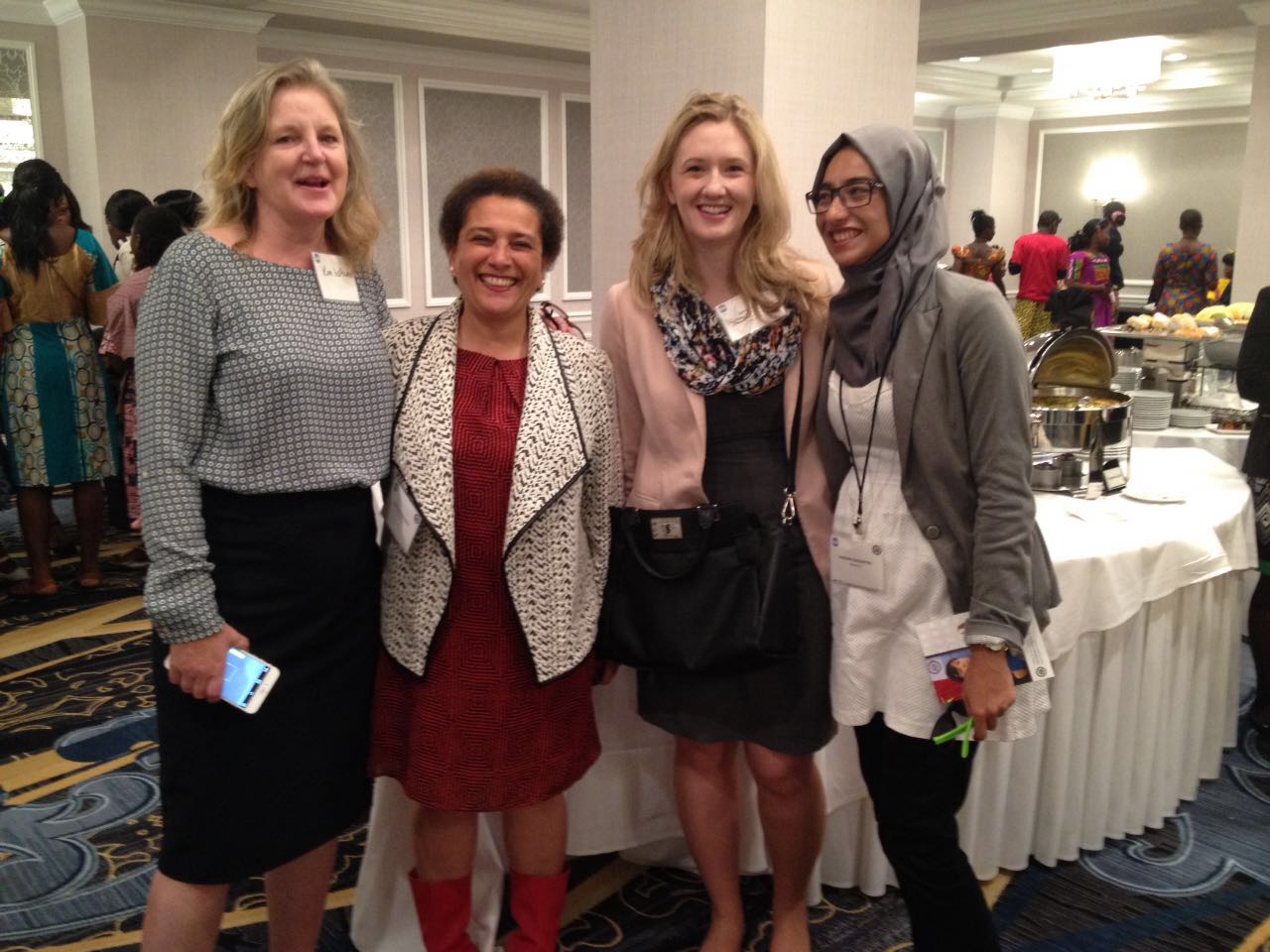
Last Tuesday October 11th, in celebration of the International Day of The Girl, "We Will Rise" premiered at The White House. Two of our RISE Alumni, Zahra and Hasna, and our Director Dr Jamila Bargach were invited to The White House to attend the premiere.


We are proud to be working to Let Girls Learn - in Aït Baamrane, Agadir, and around the world.
Follow us on Twitter, Instagram, and Facebook to learn more about how we are doing this, the Sustainable Development Goals, COP22, and our work to fight for global gender equality and promote sustainable development for all.