Dar Si Hmad for Development, Education and Culture is an independent nonprofit organization founded in 2010 promoting local culture and sustainable initiatives through education and the integration of scientific ingenuity in Southwest Morocco. We operate North Africa's largest fog harvesting project, providing villages with access to potable water. Our Water School and Girls' E-Learning Programs build capacity in the Anti-Atlas Mountains. Through our Ethnographic Field School, researchers and students engage with local communities in Agadir, Sidi Ifni, and the rural Aït Baamrane region for meaningful cross-cultural exchange.

Showing posts with label Morocco. Show all posts

Wednesday, June 16, 2021

Dar Si Hmad May 2021 Highlights

It’s already mid-June, and you are wondering if Dar Si Hmad keeps any highlights from the previous month? Yes, of course it does! 


The following events stood out of our NGO’s usual activities:

  • Le jardin vert’: a gardening program Dar Si Hmad launched at Moulay Driss High School in Sidi Ifni. This initiative aims at educating the high schoolers about the importance of maintaining their school environment through the integration of the students in the gardening activities of the school-yard spaces. The larger goal is ecological education and teaching young pupils to develop their sense of volunteering and civic engagement.

A group of people outside

Description automatically generated with medium confidence

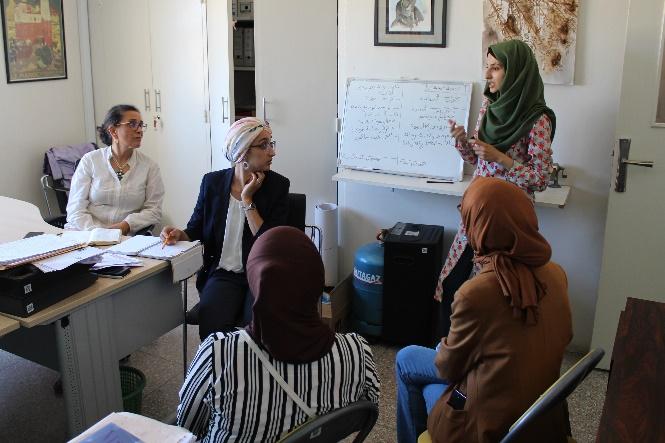
  • A young ambitious couple, the founders of IZIProtéine startup in Agadir, came to our premises to pitch their project in front of Dar Si Hmad staff. A future collaboration with IZIProtéine is under study. The biofertilizers they produce can be of a great added value to the soil of Agdal Id Aachour pedagogical farm and the farmer-communities that DSH has the pleasure to work with.

A group of people sitting around a table

Description automatically generated with medium confidence

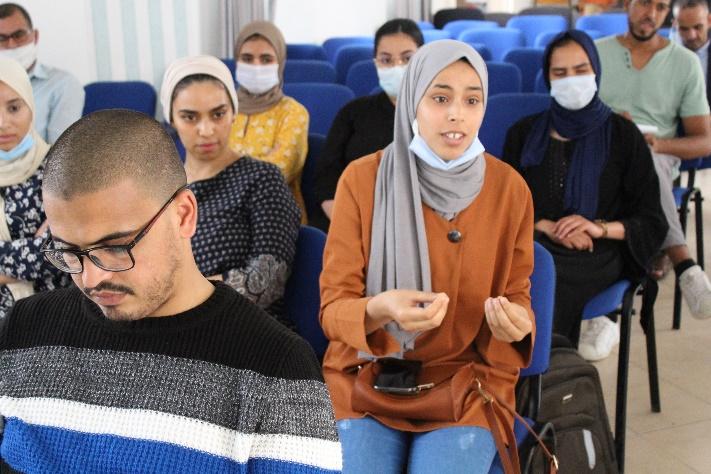
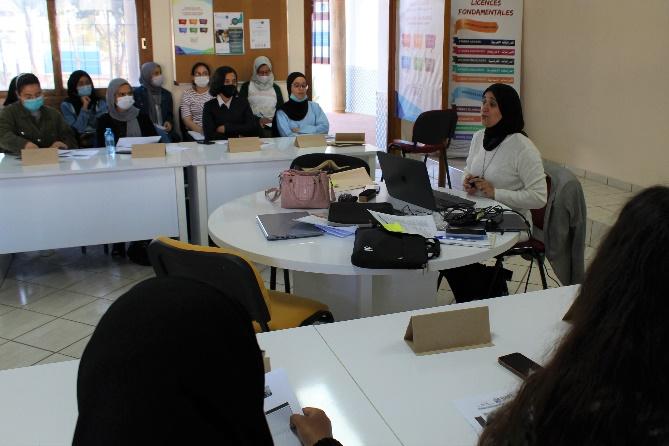
  • 3 sessions from the ECO Mill edition of the RISE program were organized throughout May 2021. PROTOTYPING, TESTING and  PITCHING modules were covered in three consecutive weekends by amazing and generous coaches. The closing ceremony of this program was held on the 12th of June, come see it next month and in the meantime do check our social media pages to see the pictures from the event.

A group of people sitting in chairs

Description automatically generated with medium confidence

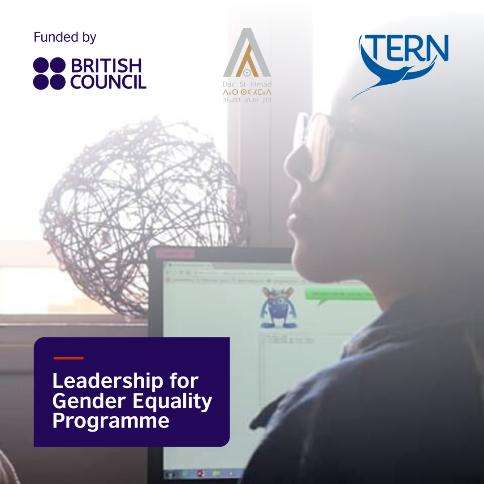
  • The preparations for this year’s Summer Tech Camp were another highlight of May 2021. This year’s edition was made possible by a supporting grant from the British Council.  And TERN – The Entrepreneurial Refugee Network, based in England is our partner. This program goes under the auspices of the ‘Leadership for Gender Equality’ program of the British Council .

A group of people in a room

Description automatically generated with medium confidence


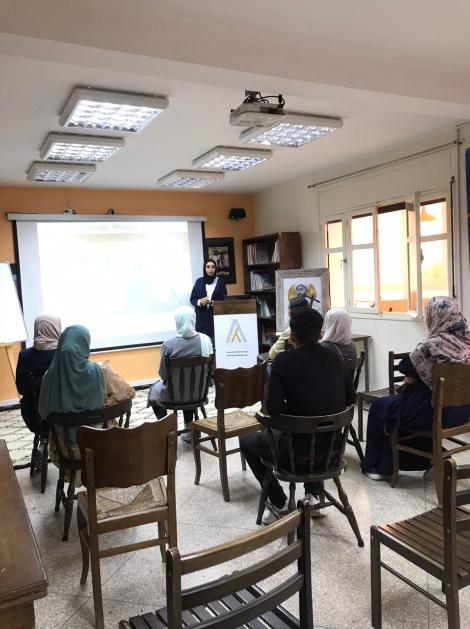
  • At the end of the month, 6 student-groups from the Business Department of the Ait Melloul Campus, Ibn Zohr University, paid us a visit at Dar Si Hmad’s office as they expressed their interest in discovering our NGO and its project management models when their teacher Dr. Affaf Amrani, a DSH friend and volunteer, spoke about civic engagement. Our staff was pleased to welcome and respond to the questions of the ambitious and budding students.

A picture containing indoor, floor, wall, ceiling

Description automatically generated

Follow @darsihmad on Twitter and Instagram, and Dar Si Hmad for Development, Education and Culture on Facebook and LinkedIn and stay updated about our everyday accomplishments!


Friday, May 7, 2021

Dar Si Hmad April 2021 Highlights

 Our micro-projects have occupied most of our time this past month. In addition to our ongoing rural developmental projects in Ait Baamran, our urban-based educational programs have all been running simultaneously in April. Find below DSH’s highlights from April 2021:

On Saturday the 10th, a new edition of the RISE program was launched. This term called ECO Mill: from IDEAS to STARTUPS, is a training on green entrepreneurship designed by Dar Si Hmad in partnership with the Faculty of Arts and Human Sciences of Ibn Zohr University. Benefiting primarily the Faculty students but also other students attending other Agadir-based faculties and Institutes. Two modules have been so far covered, and if you would like to know what they consisted of, stay tuned for our upcoming blog article!

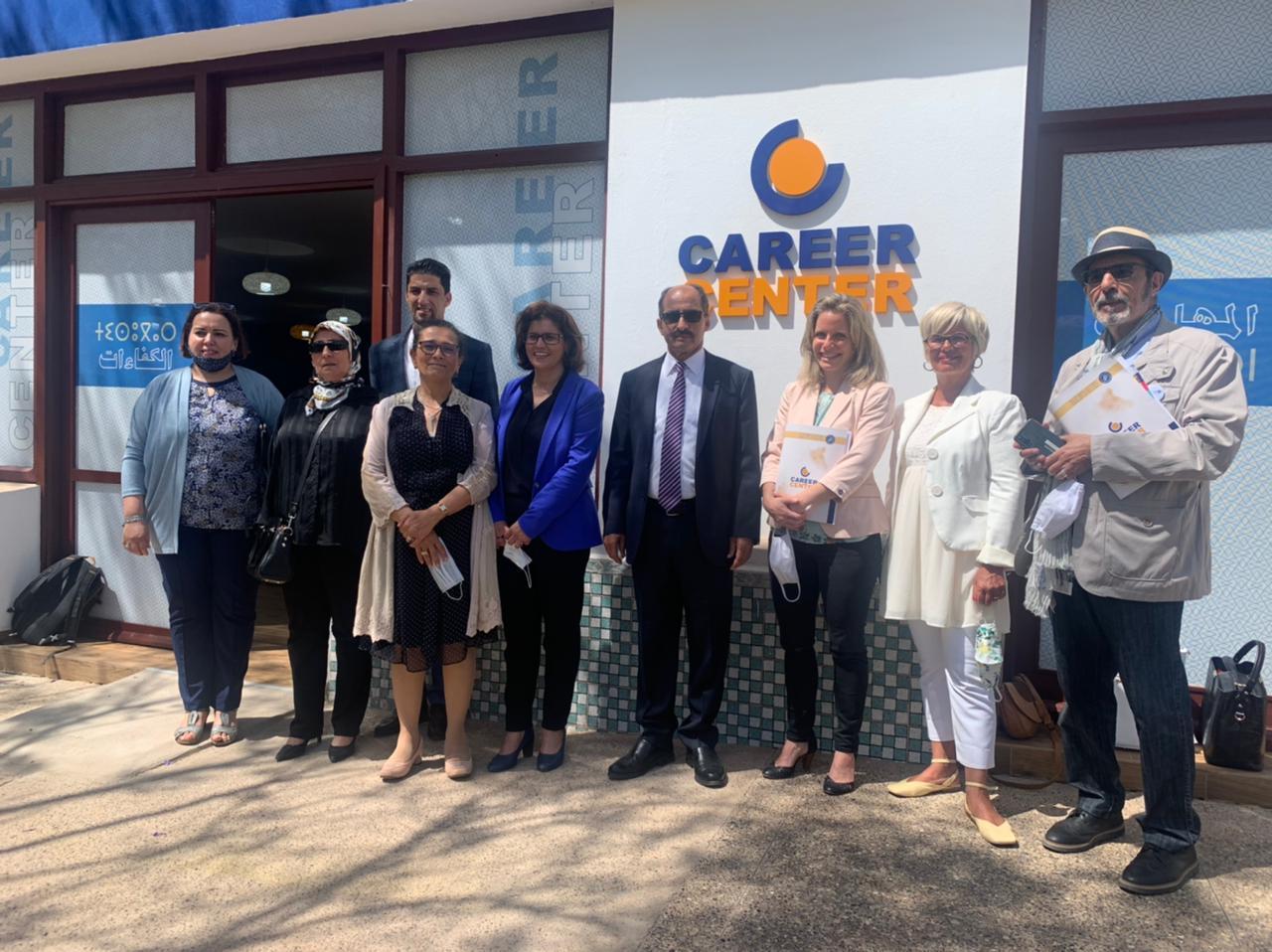
In the same context of developing the students’ entrepreneurial skills, Dar Si Hmad’ Executive Director, Dr. Jamila Bargach attended the inauguration of the Faculty’s new Career Center, a space dedicated to entrepreneurship for the students of the Faculty, training in the Humanities is an asset to discover in the world of entrepreneurship.

A picture containing graphical user interface

Description automatically generated

At Dar Si Hmad, we’ve also been actively preparing for this year’s Summer Tech Camp to benefit 3 groups of rural girl high schoolers in Sidi Ifni. This new edition will be organized in partnership with the UK organization TERN – The Entrepreneurial Refugees Network, and it is funded by the British Council in the framework of its ‘Leadership for Gender Equality’ program. 

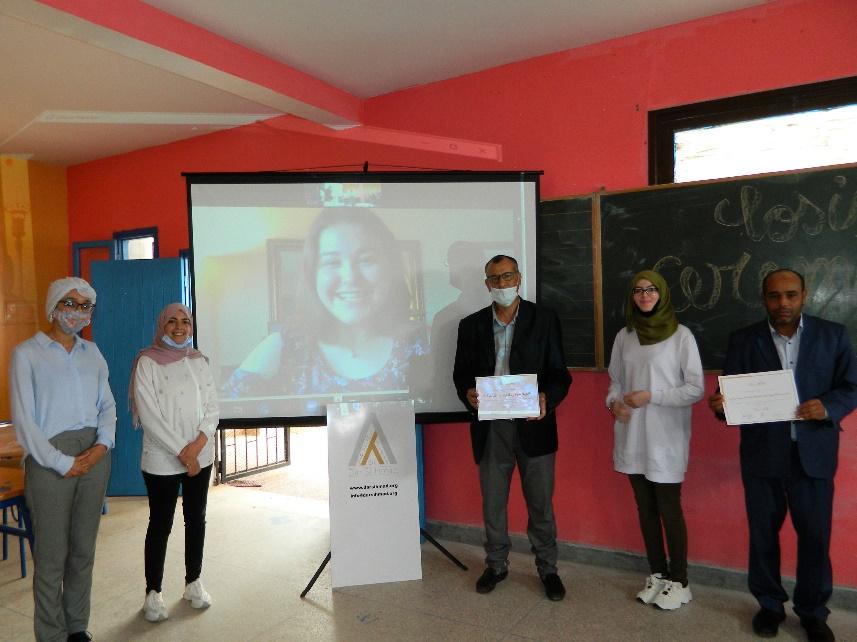
GRACE – Girls Read and Communicate in English- program is another educational program to have run this last month. On Friday, 30th , its closing ceremony was organized in Moulay Idriss High School, with the participation of the beneficiaries’ instructor, Ms. Elyssa Wrubel, online and directly from the United States. 

Regarding our developmental rural projects, Dar Si Hmad’s Office manager, Miss Samira Arjdal, was invited on the 5th of April, to participate as a panelist in the ALINOV Webinar on Green Entrepreneurship organized by MEDAFCO-Development. In this online event, Samira talked about our organization’s experiences in the fields of agroecology and water management. To check the recordings of the two panels that she was part of, click on these hyperlinks: Panel on Agroecology & Panel on Water Management.

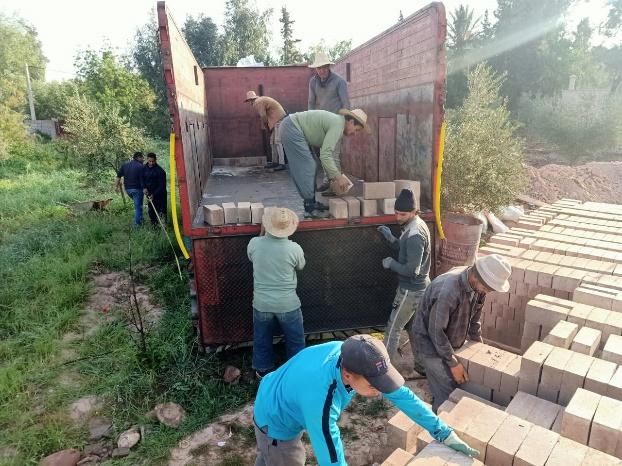
In the field,  the construction bricks for our indigenous seed-bank were delivered to our Agdal Id Aachour Pedagogical farm. Please make a donation through the GobalGiving platform to contribute to ecological initiatives! 

A picture containing outdoor, grass, person, tree

Description automatically generated

Finally, Mr. Mustapha Ouafegha, the project coordinator of Afous Ghissiki, training in Agroecology, has successfully completed the Marrakesh Organics Permaculture Design Course, which will enable him to share more updated knowledge in the field with the beneficiaries of the oases of Tighmert and Ouggoug.

Keep on following us on our social media platforms to receive more updates on our diverse projects!


Friday, June 28, 2019

Capacity Building Program Closing Ceremony

Written by DSH fellow Katie Tyler
After eight months of lots of hard work, learning, relationship building, and fun, the Capacity Building Project has come to a conclusion!
This past Saturday we met with our participants and two of our trainers for the Capacity Building Closing Ceremony. Each pair of participants from the same NGO presented on their organization’s work to launch a new project based on the knowledge they have gained throughout the training workshops. Our participants have been hard at work during the past six weeks to turn their visions into concrete plans for change.
We were incredibly impressed by their innovative ideas as well as the amount they have learned over the course of the past eight months. The participants used tactics such as SWOT analyses, SMART goals, problem and solution trees, and GANTT charts to analyze their projects’ potential impacts and make thoughtful action plans. We expect to see great things from each participant in the coming months, as well as throughout the duration of their long and successful careers! 
After the participants finished sharing their plans for new projects, two of our trainers gave their feedback on the presentations as well as their final thoughts on the success of the training workshop series.  Our NGO president, Aissa Derham, and our Executive Director, Jamila Bargach, also gave concluding remarks on the work that went into developing this program. We celebrated our achievements with a delicious lunch prepared by our cooks Aatiqa and Hadda.
However, the impact of the Capacity Building Program does not end here! We have developed a Capacity Building Training manual in Darija that covers useful information for NGOs to develop their organizations. Each participant was given extra copies to distribute among interested leaders in development across southern Morocco. We also plan to make this manual available online to those who want to learn more about building their NGO’s capacity and maximizing their organization’s impact.
Although the program has officially ended, I hope that the participants will continue to maintain their relationships with each other and with Dar Si Hmad in order to support each other in their tireless work to support their communities. Since the goal of the Capacity Building Project was not merely to deliver instructions for change but rather to equip participants with the tools to improve themselves and those around them, participants will be able to continue to draw upon their knowledge to build NGOs’ capacity. Perhaps Dar Si Hmad will launch another Capacity Building Workshop, and these participants will lead their own initiatives to build other organizations’ capacities! 

Sunday, June 2, 2019

Learning Across Continents: Let Me Tell You about the Mountains in Morocco!


Written by our former intern, Ms. Ambar Khawaja

Ambar during her stay in Morocco

Let me tell you about the mountains in Morocco. As you begin to climb them, you look up to see the sun shining through the clouds and the peaks peeking out above them. As you continue forward, you begin to find yourself in the fog. This fog can be bothersome, because you want to be able to see the top and the climb is no longer as scenic as it started out. It clouds your vision. It seems like forever until you are out of the fog, but as you keep walking you start to brim with joy and thankfulness because you can once again see clearly. You are high above everything, watching the world move along at what seems like such a slow pace in the grand scheme of things. Perspective.
I once was the girl who thought she had her life figured out:
1.    Graduate high school accomplished;
2.    Go to a good college and major in neuroscience;
3.    Get my PhD and do research on the brain;
4.    Get tenure at a university so that I can be a professor and have my own lab;
5.    Amongst all of this, travel the world
Truthfully, this was not entirely my dream. It was a mixture of the dreams of the people I’ve looked up to and it was sculpted by how society views success. I was equipped for this specific version of life and did not expect to deviate from it. I had such certainty chasing after these goals. Everyone was in awe of my drive and determination to reach the end; but it seemed like even if I did reach the end, I would never reach satisfaction. I felt empty without praise because my worth was based off of my achievements. It was no wonder that when I reached a new goal, I would either become stalled or feel like there was still something lacking. The thought that there is always someone better than me out there constantly seeped into my mind. This led to a cycle of chasing prestige, recognition, and anything else that I could use to make myself feel better about my worth. I never knew that success and despair could happen simultaneously, and that the former could cause the latter. I didn’t know how to just be.

Taken by Ambar

What do people do in the in-between of life? The in-between is what I refer to as the space that occupies the emptiness between my failures and my successes. It’s my worst mental enemy, but if handled correctly it can be my best mental friend. I would like to point out that this space that baffled me is actually just called life by most people, and that the accomplishment-hungry-me just didn’t know what living actually was yet.
While my goals and accomplishments were a large part of my life, they weren’t the only part, and I was neglecting the rest of myself. I was becoming unaware of the many other layers I contained as a person, leading me to be hollow.
At times like this, far away from home on another continent, where people speak another language and I know virtually nothing, I am sitting in my room reflecting and writing about the changes I have noticed in the month and a half I’ve spent here. Worries are less, small mistakes are forgiven easier, and I am not basing my value on achievement. Here, people do not care about what you have done as much as they care about the kind of person you are; whether you are kind and how willing you are to try and learn. Finally, in a place where I know nothing, I can learn everything without self-judgement. I do not have the pressure to always be doing something in a society that puts emphasis on busyness. What a privilege. Finally, I am learning to act in the in-between. I am emptying the pot that everyone poured their hearts and souls into and putting it in storage so that I can begin to fill my own. Each is important. One is what I came from and what I am made of, and the other is what I will become.


My community pumped me with love and purpose, so even though I didn’t expect to deviate from my original life plans, I was prepared for it. My family, mentors, teachers, and friends are only some of the people who helped inflate me so that I could learn to fill up my skin. Creating a community for myself was a conscious choice. Yes, I am uncertain about my future place in the world. My plans are changing, and I don’t know what I am meant to do. Purpose is such a heavy word that calls my name. At a time like this, I have found that my immense skill of worrying is truly no help to me, but the simple human action of breathing serves to be the best mechanism to assist me. Life has taken me this far, and the universe has created a path and given me all the signs I need to follow it along to my destination.
Every day I may find myself in the foggy place, I remember the top of the mountain I’ve always reached, regardless of my worries, confusion, and uncertainty. Faith is showing me my way, step by step. I need to take the time to pause and remember the grand scheme of the universe. Every small mistake I have made will not crush me, and every person who doesn’t like me doesn’t diminish my value.
Where do I go from here? Besides wherever life is taking me, I have learned that I need to place more effort into self-validation rather than external validation. I need to remember to learn from everyone, because everyone has something to teach me, whether good or bad. It’s silly to think that any given life has nothing of substance. I should not be so quick to judge others and instead I should grow my patience by realizing that I too have made mistakes. However, I need to continue to become better at discerning those who are toxic and become wiser with how I invest my energy and who I invest in. Above all, I want to become a person that jumps into the unknown quicker because it is always an opportunity to grow, and I must always make time to reflect on how far I have come and where I want to go next.

Tuesday, April 30, 2019

Another Month, Another Capacity Building Workshop!


Written by Ms. Tyler and Ms.Mazoud

Our participants during the workshops

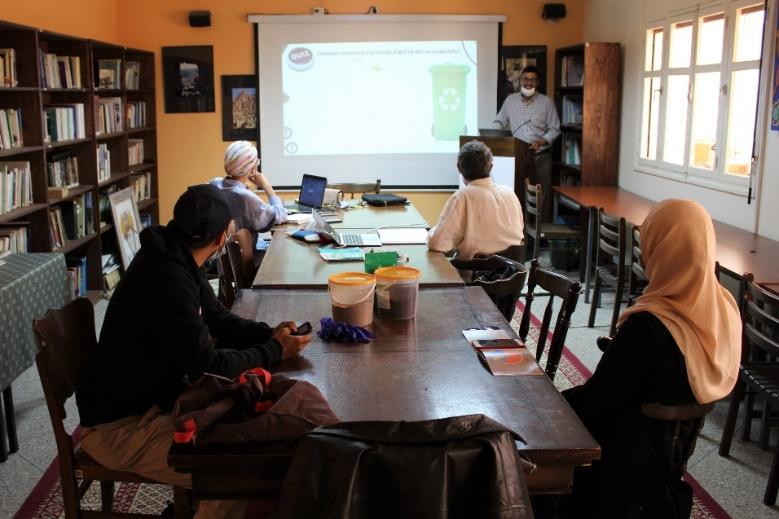
Dar Si Hmad organized the last TWO workshops for the Capacity Building Program! Our participants have gained so many insights on their experiences and aspirations, and we can’t wait to see how they use their new knowledge to benefit their communities.
The third week of March marked the fifth workshop for the capacity building program for NGOs. Our trainer Soufiyan Saaoudi led this workshop which was about Leadership, Team building Skills, and Communications. 
We were very lucky to learn from the experience and expertise of our trainer, Mr. Soufiyan and to bring his own perspective on how to manage an NGO, as the president of the Youth EmpowermentSociety - YES organization.
Throughout these sessions, we trained our participants to create a communication strategy with an emphasis on the importance of digital communication and marketing. 
For our team building skills session, we took our participants to the roof where we played many games that encourage and teach our participants how to work within a team.
The trainer Soufiyan during the fifth workshop

For April’s workshop we gave the opportunity to our participants to choose the topics they still want to learn about, they voted for finding funding! Our final training session occurred April 21-22, where our trainer Imane El Ouizgani led two sessions for our participants, one on fund generating activities and the other on finding and writing grants applications.
On the first day, participants brainstormed ideas for fund-generating activities for their own NGOs in order to strengthen their NGOs’ financial viability and expand their available resources. Participants gave feedback to each other on how they could make their programs more competitive and profitable. 
We also worked with our participants to develop business plans for their fund-generating activities that they could use to propose their ideas to their boards and potential funding sources.  Participants also made SWOT analyses and GANTT charts of their proposed projects, so they could visualize the necessary steps they need to take to make their ideas into realities.
Our participants during one of our rooftop activities 

On the second day, we explored another source of income for NGOs—grants! Imane covered the grant application process from start to finish, including the technical challenges of understanding grant requirements and registering for application portals.
Participants gained experience in using effective keywords when searching for grants and were introduced to components of effective storytelling in writing grants. We also introduced our participants to crowdfunding platforms, focusing on our partner, Global Giving.
The ultimate purpose of this workshop was to make progress on applying the knowledge participants have gained during this training to creating social impact in their own communities. 
One of the greater objectives of this DSH initiative is to equip our participants with the skills to launch new projects at their own NGOs. So far many of our participants have exciting ideas for new initiatives they intend to launch after honing their skills through the Capacity Building Workshop. 
We hope to meet individually with our participants soon so we can learn more details about their progress in launching these new projects and provide advice as needed. We look forward to meeting with our participants for one final time as a complete group for our closing ceremony in June!
Trainer Imane during the sixth workshop

Thursday, April 11, 2019

RISE Citizen Journalism 2019: The Two First Weeks


Written by our intern Ms. Katie Tyler 

Risers during the workshops
With the rise of social media, we live in a world where citizens have more power than ever to share information and news. Citizens are now able to share their observations and thoughts with more people than has ever been possible before. Citizen journalism will become even more important in the future, as we need more voices from everyday people to speak out against environmental injustices that tend to affect marginalized communities disproportionately.
For the past decade Dar Si Hmad has been committed to empowering young people and protecting the environment of southern Morocco. Creating a new edition of RISE that specifically focused on citizen journalism and environmental justice seemed like the most effective way to meet both of these goals.
Our vision for this new edition of RISE is to equip young leaders in Agadir with the skills to effectively share stories and information both within their local communities and on a national and international platform as citizen journalists. We have recently wrapped up our first two sessions with our new class of RISERs! 
During our orientation session, we got to know our RISE participants and discuss our hopes and goals for this workshop series. We played a lot of different games to learn each other’s names and get to know about our interests and aspirations. For one game, we passed around a roll of toilet paper and instructed RISERs to “take as much as they needed.” When we finished passing around the roll, we told them that they had to tell the group one fact about themselves for each piece of toilet paper they took!
Besides spending time getting to know each other, we spent time on building a new community of dedicated citizen journalists. We wrote a constitution for the rules that would shape our RISE community and agreed to uphold this social contract. We made goals for our involvement and left with a clearer vision of the kinds of citizen journalists we wanted to become.
During the second week of programming, we focused on journalistic ethics. Using the guidelines from the Society of Professional Journalists as a model for our curriculum, we explored the different facets of ethics in journalism. Because Dar Si Hmad believes that students learn more if they are involved in activities and must think for themselves, we included many interactive activities. 
We had one activity where participants read real-life news articles and had to use their critical reading skills to investigate whether the articles were fake news or real headlines. We also encouraged participants to work together on teams. For our session on minimizing harm as journalists, we presented groups with different ethical scenarios in which they had to decide whether to grant interview subjects anonymity, and if so, how they would take measures to protect their subjects’ identities.
Of course, we made time for fun games so that we could continue to bond as a group! We created a BINGO sheet where each square had a characteristic or attribute (such as: “Never had a cavity” “Has three siblings” “Plays soccer”). Participants were instructed to find different RISERs who could sign the different squares that contained an attribute that described him or herself. Whoever could find enough RISERs who fit the different descriptions so that their BINGO sheet had a complete signature in a horizontal, diagonal, or vertical line would win!
As a facilitator I also learned a lot from these RISE sessions. All the participants have very thoughtful perspectives on the value and uses of citizen journalism and have articulate visions for how they want to create change in their communities. I am very excited to continue working with our RISE participants on honing their skills as journalists. They already have so many exciting stories to share, so I can’t wait to sharpen their storytelling abilities and work with them to investigate new stories to spread! 
  

Sunday, March 31, 2019

Preparing for RISE Citizen Journalism 2019!

Written by DSH Intern: Imane Arjdal

After so many months, the time has finally come to launch our newest edition of the RISE program. Since 2013, during each academic year, Dar Si Hmad offers a training program for various beneficiaries, students, and apprentices living in Agadir that contains workshops, conferences and personal and professional development activities that run for 2 to 6 months.
This year marks the seventh edition of RISE program which will be under the theme of citizen journalism. This program aims to offer training on how to use media to promote environmental justice and a wide range of social issues including educational and global topics.
This edition of the RISE program will include sessions on citizen journalism ethics, writing techniques, photojournalism, videojournalism, podcasting, broadcasting, and many other interesting topics. This year’s RISE program will be different from the traditional classroom sessions and will instead give the beneficiaries the best knowledge in a welcoming atmosphere filled with dialogue, positivity, and support.
At the end of each session, participants will have to do an assignment to apply what they have learned and eventually to work toward publishable contents. Late June will mark the conclusion of the program, participants will present final projects in order to graduate the program.
We launched the applications on February 14th. We were surprised by the number of applicants we received and of the high quality of the applications. We selected more than forty applicants to be interviewed. Through the interview, we knew more about our potential risers, their background, their interests and their motivation for the program.
After many discussions, we were finally able to decide the foremost and best-suited applicants based on their applications, essays, and performance during the interview. We ultimately selected 24 applicants that showed the most motivation for the program.
Dar Si Hmad’s team is really excited for this year’s RISE program on Citizen Journalism, and we can’t wait to meet the participants and for them to start a new journey of knowledge, support, gaining new skills, setting objectives, and experimenting with new approaches that will help them become creators of their own future.  

Friday, March 8, 2019

Capacity Building Program: January and February's Workshops

Written by DSH Fellow: Katherine Tyler
The participants with The trainor Imane
In this past two months, Dar Si Hmad has had TWO successful workshops for the Capacity Building Workshop! Our participants have gained so many insights on their experiences and aspirations, and we can’t wait to see how they use their new knowledge to benefit their communities.
In January, the workshop’s themes were Organizational Management and Partnerships and Advocacy. We were lucky to draw from the experience and expertise of our trainer, Hassan Achrwaw
Our workshop on Organizational Management focused on how NGOs can translate their visions for change into efficient, sustainable actions. While we discussed theories on how to create strategic plans, we also equipped our participants with tools on how to plan for change most effectively. For one exercise, participants learned how to develop SWOT analyses to implement new organizational strategies and changes. 
Trainor Hassan during the workshop
The Partnerships and Advocacy Program covered how NGOs can successfully launch awareness campaigns to promote change in their communities. Because we believe here at DSH that you learn more when you’re having fun, we had the participants join in on funny debates. Each of the three groups was assigned to defend the rights of… common pests! One group defended the right of lice, another the right of rats, and the third group represented cockroaches. We then had judges vote on whether the participants gave convincing defenses. We all ended the session laughing, but the participants demonstrated that they had absorbed the trainer’s advice on rhetoric and the elements of a convincing argument.
This past month in February we specifically focused on project management and evaluation with our trainer Imane El Ouizgani. We covered project development from its inception to the very last stages of evaluating a project’s success. Participants learned how to conduct a feasibility of a new project with PESTLE analyses and brainstorm their assumptions on challenges and outcomes related to new projects. We also discussed the practical measures necessary for implementing a successful project by introducing the GANTT chart tool. 
For our daylong workshop on project evaluation, we brainstormed solutions to data collection challenges and thought in new ways about how to find accurate and relevant indicators for projects. We also began to delve into the topic of how to convey the results of projects to different audiences, as your communication of data with your donors, staff, and beneficiaries often requires different focuses. 
Trainor Imane during the workshop
Throughout these sessions we incorporated fun activities to energize our participants and encourage networking. One memorable energizer was when we played some calling and name games on the roof. We might just bring our participants onto the roof again next month for some activities next month, if the weather stays pleasant!
Each week we assign the participants homework so that they apply what they have learned in our workshops to improve their own NGOs. Now, as we’re coming towards the conclusion of the training series, we are working more closely with our participants on developing and launching new projects and campaigns. In the next four months we will be seeing our efforts materialize with new initiatives in southern Morocco!

Our participants during the workshops

Wednesday, October 10, 2018

Learning Across Continents: America sharing knowledge with Africa


Written by DSH Fellow Katie Tyler

Katie is a recent graduate from Princeton and a fellow of Labouisse Fellowship. She is working with Dar Si Hmad on the capacity building project for NGO's .

Dar Si Hmad Intern Katie Tyler
A little more than five years ago, I found out that I had received the opportunity of a lifetime. Thanks to the National Security Language Initiative for Youth (NSLI-Y), I had been awarded a scholarship to study Arabic in Marrakech. I had never lived outside of the U.S. before, and I was excited for the chance to be immersed in studying a foreign language. At the end of my six-week experience, I was able to speak Modern Standard Arabic a little better, but I wanted to continue improving my language skills.
When I entered college the following year, I knew that I wanted to continue studying Arabic and different cultures of the Middle East and North Africa. Becoming a Near Eastern Studies (more commonly known as Middle Eastern Studies) major at Princeton University was an obvious choice for my course of study.
During my third year of college, I spent a year writing an independent research paper the reconstruction of Agadir after the 1960 earthquake. Reading books about Moroccan history and newspaper archives from Agadir reminded me of how much I missed living in Morocco. Based on my experiences interning at a youth homeless shelter in Newark, New Jersey, I also knew that I wanted to gain more experience in working with nonprofit organizations that fight poverty. 
A mosque in Agadir (Taken by Katie)
I was lucky enough to attend a university that is able to support my career aspirations to work in sustainable development abroad. I am able to work in Agadir with Dar Si Hmad thanks to the Labouisse Fellowship, named after Princeton alum Henry R. Labouisse, who was most notably awarded a Nobel Peace Prize for his work as the president of UNICEF. The Labouisse Fellowship provides graduating Princeton seniors with the funding to pursue a yearlong project in international development in partnership with a local nonprofit organization.
Henry R. Labouisse
I reached out to the former NSLI-Y program coordinator for advice on finding a partnership with a Moroccan organization, and she enthusiastically recommended Dar Si Hmad. When I researched Dar Si Hmad’s work to provide water to rural communities and empower young people, I did not hesitate to get in touch. I worked with Jamila Bargarch, Dar Si Hmad’s Executive Director, and Maisie Breit, the former EFS Manager, to devise a plan for how I would use the Labouisse Fellowship to support some of the organization’s new projects during my time in Morocco.  After spending so many hours reading and writing about Agadir it felt surreal to be moving to the city for an entire year in late June.

One of the main projects that I am working on here at Dar Si Hmad is the new capacity building project. I am working closely with Jamila and Hafida Mazoud, DSH’s Communications Officer, to design and implement an eight-month-long training series for a group of small associations in Agadir, Tiznit and Sidi Ifni regions. Our beneficiaries are working with a diverse range of issues, such as literacy in refugee communities, women’s empowerment through income-generating initiatives, the preservation of cultural manuscripts, and the use of solar energy in villages. In the training, we will cover topics such as administration, financial management, and program management.
Our Intern Katie and
Communication officer Hafida
The goal of this project is to equip local leaders with stronger management skills so that they can expand their organizations’ reach and social impact more effectively. Each participant will develop and implement a new project or campaign by the program’s conclusion in June. We intend to equip participants with the tools to materialize their visions to change their communities. We are also committed to incorporating principles of environmental sustainability and gender inclusion throughout the project. I am especially hopeful that this capacity building workshop will continue to benefit communities in southern Morocco long after my fellowship concludes.      
In addition to my work on the capacity building project, I am assisting Jamila with research on Dar Si Hmad’s ongoing fog project. Outside of the office, I enjoy trying delicious new pastries from the bakeries around Agadir and going to BodyPump classes. I am improving my Darija, and I have recently started learning Tachelhit with Lahcen, a teacher who partners with Dar Si Hmad. I wrote my undergraduate thesis about how Tuareg communities attained mass literacy in the Tifinagh script, so I always try to read the Tachelhit signs written in the Tifinagh script around the city. 
If you see me in the DSH office, I am always excited to hear new recommendations on books about Morocco, as I am trying to learn as much as I can during my stay here! 
 Katie at the office