Dar Si Hmad for Development, Education and Culture is an independent nonprofit organization founded in 2010 promoting local culture and sustainable initiatives through education and the integration of scientific ingenuity in Southwest Morocco. We operate North Africa's largest fog harvesting project, providing villages with access to potable water. Our Water School and Girls' E-Learning Programs build capacity in the Anti-Atlas Mountains. Through our Ethnographic Field School, researchers and students engage with local communities in Agadir, Sidi Ifni, and the rural Aït Baamrane region for meaningful cross-cultural exchange.

Showing posts with label Let Girls Learn. Show all posts

Friday, September 4, 2020

Dar Si Hmad Highlights of August 2020


Of all specialties, Education has always been the focus of Dar Si Hmad throughout its existence, August 2020 being no exception. From searching for funds to run future educational programs, to designing children-and-youth empowerment programs, and making one of our major educational micro-projects, a lot has happened during this month despite Corona constraints. Read through this article that features the highlights of Dar Si Hmad in August 2020!  

Following the online preparation for the third edition of the Summer Tech Camp and the celebration of Eid Al Adha in exceptional conditions, this year’s program of the camp also had to be readjusted to the context in terms of the content and the organization of the venue. This year’s sessions tackled specific needs of the beneficiaries and had us put special emphasis on the online learning methods that will indeed serve them in the upcoming school year. As for the organizational side of the camp days, Dar Si Hmad did its best to ensure the respect of all the sanitary measures that will prevent the participants in the camp and our staff too from being attained by coronavirus. More than 14 days have passed since the end of this year’s Summer Tech Camp, and no case of contamination with the virus has been declared from any participant in the program. Above all, this year’s edition marked a great success for our organization. We received very positive feedback from the beneficiaries and their families, and our internal evaluation of the program was also gratifying, for all the stress and obstacles that we were able to overcome fluidly.

Simultaneously, Dar Si Hmad, in the company of the members of FIKR NGO in Sidi Ifni, have been preparing the logistics and administrative procedures to launch school support courses for the children of the villages that benefit from our fog harvesting project. Our initiative could not go ahead as planned, but we do not give up as we are currently thinking of innovative methods that can help rural students catch up with their urban-based peers who have access to the internet that fairly facilitates receiving school content. In this regard, we also invite you to think and share with us your project proposal that can be implemented in the actual context of the communities we serve, you could also contribute.


In addition to our youth and children empowerment programs in the planning phase, our work on the agroecological project Afous Ghissiki is progressing and is promisingly growing, especially with the amazing job that Mustapha, the head coordinator of the program, has been doing since his recruitment. Our continued research on the biological control of the mealybug ( Dactylium Opuntiae) in the region of Aït Baamrane is also still on. And today we are looking into adapting the new research coming out of our University in Agadir to counter this bug with a biological predator to stop this invasive species that  threatens the source of livelihood of the local economy.

And as always, the month ends with our Green Friday which has hosted this time Mr. Tom Bebien, a recycling coordinator with Plastic Odyssey; the latter being a world expedition that fights plastic pollution. If you missed our live video with him, don’t worry, we have it recorded for you as an IGTV. And if you would like to see new and exciting forms of Ljamae Azgzaw… stay tuned!


Tuesday, October 30, 2018

How GRACE came to be

Written by DSH Intern: Ambar Khawaja
First session of GRACE Program
If I could think of one reason why I am where I am today, it would be the multitude of strong female role models and mentors in my life. It has always been difficult to find representation of women that is versatile, powerful, and inspiring, but I am privileged to have seen and experienced women from all walks of life, each changing the world in their own way.
When I was musing over the kind of work I wanted to do during my gap year, I created a list of criteria my work had to meet in order for me to feel fulfilled. The key words were empowering, creative, and difficult yet possible. I chose empowering because I believe that women deserve to have choices in their lives, and what they choose should be up to them. I chose creative because this adjective encompasses all things the imagination can think of, and without imagination, the world would be stagnant. Lastly, the phrase, “difficult yet possible” was coined because I wanted to step far outside my comfort zone and try things that I had never done before. The work I wanted to do had to be feasible and able to be effectively implemented into whatever community I chose to work in. 
Ambar while she is teaching one of her classes
My original plan was to teach yoga and women’s empowerment to girls, but after talking with Jamila, the executive director of Dar Si Hmad, we realized this was not going to be possible. The language barrier between the girls and I was too difficult, so we decided to modify the program. We agreed upon teaching English because it was both achievable and something the girls needed but lacked outside of their schooling.
With help from Soufian, DSH project manager, and Hafida, DSH communication manager, we worked together pitch the idea to the school, develop a 2-month lesson plan for teaching the girls, and generate an acronym that reflected our vision. This is how GRACE (Girls Read And Communicate in English) was created.
Ambar and Hafida at the school supervisor's office
I have one group on Wednesdays and another on Fridays, totalling around 40 girls, and my classes last an hour and a half. It felt like a positive sign that we launched the first session only a few days after the international day of the girl. The first two classes mostly consisted of me adjusting to the different attitudes of the students and getting comfortable and confident teaching in front of the groups. Hafida was by my side for the first two classes, communicating the important information to the girls in Darija, but now I’m teaching solo for the rest of my sessions.
It has been quite the learning curve experience but hearing from the girls’ English teacher that they really enjoyed it and that more wanted to join made me feel like I was making an authentically positive impact, rather than falsely being helpful with good intentions. I really have never met such eager students who want to learn and answer questions like these girls.


Ambar and the english teacher
Ms Asmaa Ait Youssef
 In the second session, there were a few girls who had accidentally entered the classroom without realizing I was going to be teaching. They didn’t tell us until around halfway through the class, and when we asked them if they wanted to leave, they declined. They wanted to stay and do the activities with the rest of the class and when they had to leave early because of their schedules, they still wanted to show me their work before they left. My heart was overflowing, and I couldn’t stop smiling because I realized I had finally met all my criteria for meaningful work during my gap year.
I am very excited to see where this project goes, and my hope is that after I leave Dar Si Hmad, GRACE will grow to reach more girls with the help of future interns. Other schools were interested in the program, but it cannot be expanded right now because of lack of time and resources (there is only one of me); however, I will continue to give my all to the amazing girls I have been given the privilege to work with and hope that at the end of my time here, they will be more confident in their English abilities. And who knows, maybe that confidence will spread to other areas of their lives.
A selfie with one of the classes

Friday, October 14, 2016

SDG 5: Gender Equality

The fifth Sustainble Development Goal aims to "Achieve gender equality and empower all women and girls".


Each of the Sustainable Development Goals includes a number of specific targets. In our lead-up to COP22, Dar Si Hmad will be highlighting a few of the SDGs and how we partner with local communities and global initiatives to make progress.

For the United Nations and SDGs, Gender Equality means:
  • ending all forms of discrimination against all women and girls everywhere;
  • eliminating all forms of violence against all women and girls in the public and private spheres, including trafficking and sexual and other types of exploitation; 
  • eliminating all harmful practices, such as child, early and forced marriage and female genital mutilation; recognizing and valuing unpaid care and domestic work through the provision of public services, infrastructure and social protection policies and the promotion of shared responsibility within the household and the family as nationally appropriate; 
  • ensuring women’s full and effective participation and equal opportunities for leadership at all levels of decision-making in political, economic and public life;
  • ensuring universal access to sexual and reproductive health and reproductive rights as agreed in accordance with the Programme of Action of the International Conference on Population and Development and the Beijing Platform for Action and the outcome documents of their review conferences;
  • undertaking reforms to give women equal rights to economic resources, as well as access to ownership and control over land and other forms of property, financial services, inheritance and natural resources, in accordance with national laws;
  • enhancing the use of enabling technology, in particular information and communications technology, to promote the empowerment of women; and
  • adopting and strengthening sound policies and enforceable legislation for the promotion of gender equality and the empowerment of all women and girls at all level.
For Dar Si Hmad, gender equality means making sure everyone has the opportunity to make the most of their lives and their communities. We do this locally, nationally, and globally through a variety of programmes.

Tomorrow for the International Day of Rural Women, we will highlight the work we do with Amazigh women in Aït Baamrane's fog villages. Dar Si Hmad conducts bi-monthly capacity-building trainings for women, teaching functional literacy and mobile technologies. The workshops also explore cooperatives as routes to economic empowerment. These seminars were created to ensure that the time saved by the in-home water access brought through our award-winning fog project is invested in future generations of female leaders. The women have subsequently developed tools and skills and are on their way to becoming economically autonomous.

Meanwhile with younger girls, Dar Si Hmad promotes a variety of educational opportunities. Women around the world are discouraged from pursuing science, technology, engineering, and mathematics (STEM) fields - as well as higher education in general - by persistent sexist stereotypes. These negative messages sink in at a very early age and are reinforced throughout girls' lives. The Water School seeks to dismantle these internalized ideas through lessons on environmental science, providing opportunities for Berber girls to explore STEM fields. Our Streaming the Water School episode on "Girls in STEM" highlights the Water School's impact on young girls. For teenagers, the Girls' E-Learning program brings computer-based tutorials to young women in rural areas to help them prepare for exams, improving their access to higher education. As young adults, the RISE & THRIVE programs engage university and vocational students in professional skills development.

Nationally, Dar Si Hmad is a member of the Search for Common Ground National Coalition on "Empowerment & Rights". The Coalition focuses on strengthening the advocacy of women's rights in civil society organizations and engages in collaborative, non-adversarial campaigning for legislative reform. Our own Souad Kadi serves as an NGO Representative to the National Coalition to work toward increasing cooperation with key society stakeholders and reducing economic constraints for women.

On the international scale, Dar Si Hmad is proud to be a part of Michelle Obama's Let Girls Learn initiative. Let Girls Learn works "to ensure adolescent girls get the education they deserve. The program recognizes that around the world, girls face complex physical, cultural, and financial barriers in accessing education. As a girl grows older the fight to get an education becomes even harder. Her family must be willing to pay school fees. She may have a long, unsafe walk to school. She may be forced to marry. And she often lacks the support she needs to learn. Yet, we know that educating girls can transform lives, families, communities, and entire countries. When girls are educated, they lead healthier and more productive lives. They gain the skills, knowledge, and confidence to break the cycle of poverty and help strengthen their societies. It’s time to Let Girls Learn."

In the documentary "We Will Rise: Michelle Obama's Mission to Educate Girls Around the World", the First Lady of the United States, actresses Meryl Streep and Freida Pinto, and CNN's Isha Sesay journey to Morocco and Liberia, where they meet young women overcoming incredible odds to change their lives. You can read more about Michelle Obama's passion for girls' education in this guest piece written by the First Lady for CNN.

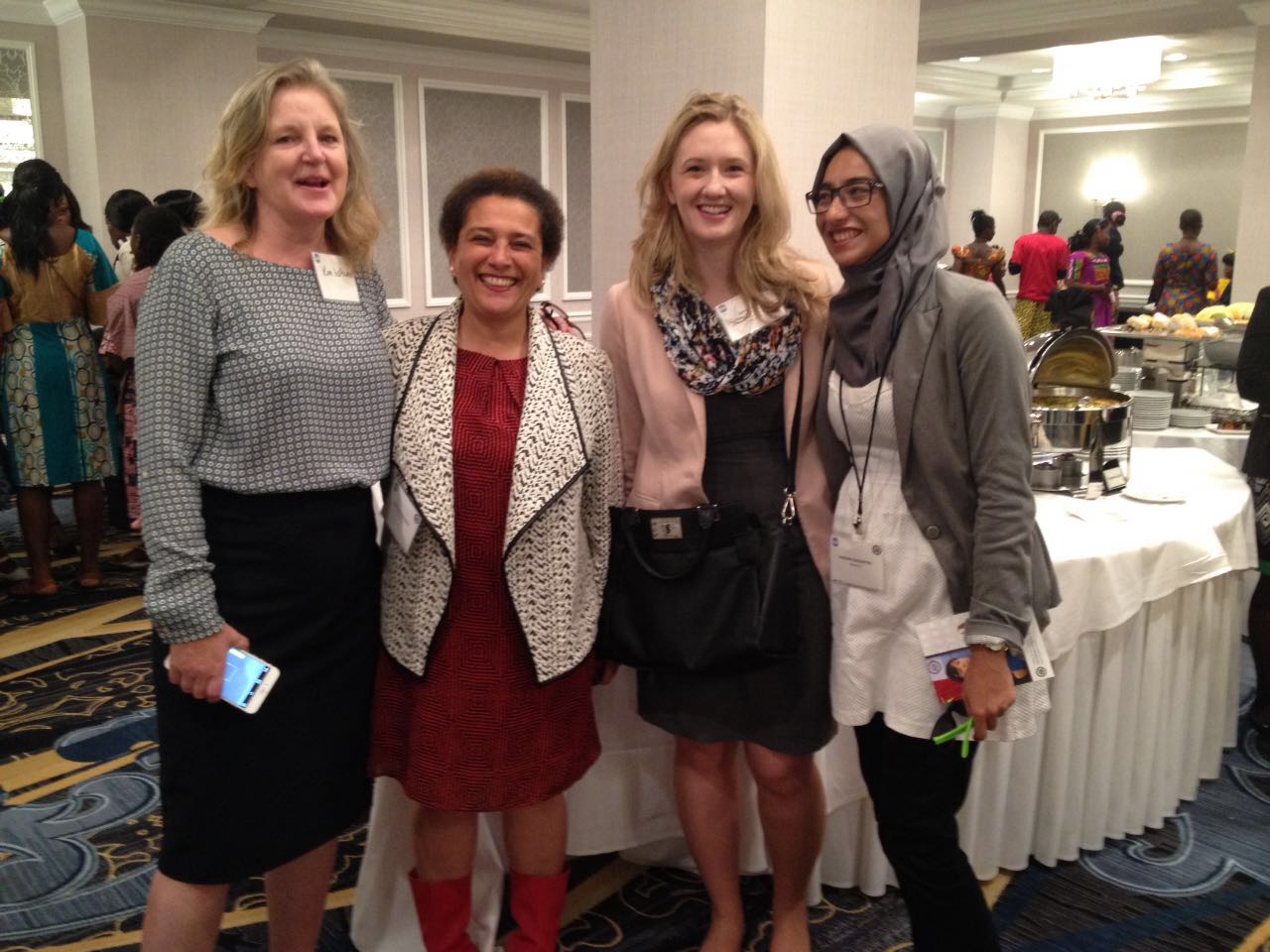
Last Tuesday October 11th, in celebration of the International Day of The Girl, "We Will Rise" premiered at The White House. Two of our RISE Alumni, Zahra and Hasna, and our Director Dr Jamila Bargach were invited to The White House to attend the premiere.


We are proud to be working to Let Girls Learn - in Aït Baamrane, Agadir, and around the world.
Follow us on Twitter, Instagram, and Facebook to learn more about how we are doing this, the Sustainable Development Goals, COP22, and our work to fight for global gender equality and promote sustainable development for all.