Dar Si Hmad for Development, Education and Culture is an independent nonprofit organization founded in 2010 promoting local culture and sustainable initiatives through education and the integration of scientific ingenuity in Southwest Morocco. We operate North Africa's largest fog harvesting project, providing villages with access to potable water. Our Water School and Girls' E-Learning Programs build capacity in the Anti-Atlas Mountains. Through our Ethnographic Field School, researchers and students engage with local communities in Agadir, Sidi Ifni, and the rural Aït Baamrane region for meaningful cross-cultural exchange.

Showing posts with label English. Show all posts

Tuesday, October 30, 2018

How GRACE came to be

Written by DSH Intern: Ambar Khawaja
First session of GRACE Program
If I could think of one reason why I am where I am today, it would be the multitude of strong female role models and mentors in my life. It has always been difficult to find representation of women that is versatile, powerful, and inspiring, but I am privileged to have seen and experienced women from all walks of life, each changing the world in their own way.
When I was musing over the kind of work I wanted to do during my gap year, I created a list of criteria my work had to meet in order for me to feel fulfilled. The key words were empowering, creative, and difficult yet possible. I chose empowering because I believe that women deserve to have choices in their lives, and what they choose should be up to them. I chose creative because this adjective encompasses all things the imagination can think of, and without imagination, the world would be stagnant. Lastly, the phrase, “difficult yet possible” was coined because I wanted to step far outside my comfort zone and try things that I had never done before. The work I wanted to do had to be feasible and able to be effectively implemented into whatever community I chose to work in. 
Ambar while she is teaching one of her classes
My original plan was to teach yoga and women’s empowerment to girls, but after talking with Jamila, the executive director of Dar Si Hmad, we realized this was not going to be possible. The language barrier between the girls and I was too difficult, so we decided to modify the program. We agreed upon teaching English because it was both achievable and something the girls needed but lacked outside of their schooling.
With help from Soufian, DSH project manager, and Hafida, DSH communication manager, we worked together pitch the idea to the school, develop a 2-month lesson plan for teaching the girls, and generate an acronym that reflected our vision. This is how GRACE (Girls Read And Communicate in English) was created.
Ambar and Hafida at the school supervisor's office
I have one group on Wednesdays and another on Fridays, totalling around 40 girls, and my classes last an hour and a half. It felt like a positive sign that we launched the first session only a few days after the international day of the girl. The first two classes mostly consisted of me adjusting to the different attitudes of the students and getting comfortable and confident teaching in front of the groups. Hafida was by my side for the first two classes, communicating the important information to the girls in Darija, but now I’m teaching solo for the rest of my sessions.
It has been quite the learning curve experience but hearing from the girls’ English teacher that they really enjoyed it and that more wanted to join made me feel like I was making an authentically positive impact, rather than falsely being helpful with good intentions. I really have never met such eager students who want to learn and answer questions like these girls.


Ambar and the english teacher
Ms Asmaa Ait Youssef
 In the second session, there were a few girls who had accidentally entered the classroom without realizing I was going to be teaching. They didn’t tell us until around halfway through the class, and when we asked them if they wanted to leave, they declined. They wanted to stay and do the activities with the rest of the class and when they had to leave early because of their schedules, they still wanted to show me their work before they left. My heart was overflowing, and I couldn’t stop smiling because I realized I had finally met all my criteria for meaningful work during my gap year.
I am very excited to see where this project goes, and my hope is that after I leave Dar Si Hmad, GRACE will grow to reach more girls with the help of future interns. Other schools were interested in the program, but it cannot be expanded right now because of lack of time and resources (there is only one of me); however, I will continue to give my all to the amazing girls I have been given the privilege to work with and hope that at the end of my time here, they will be more confident in their English abilities. And who knows, maybe that confidence will spread to other areas of their lives.
A selfie with one of the classes

Wednesday, September 26, 2018

Learning Across Continents: My first travel abroad experience


Written by DSH intern Ambar Khawaja:

Ambar Khawaja is an American intern on a gap year of service through UNC’s Global Gap Year Fellowship. She is working with us on an upcoming project that we will reveal more information about in the future on our blog. 


Traveling means a different thing to each person who experiences it. When I was preparing to come to Morocco, I had no idea what it would mean to me. I listened to stories of other people’s travels overseas with wide eyes, peppering them with questions with the intent to satisfy what I believed I had not yet experienced. 
I spent hours scrolling through my social media, seeing beautiful, vibrant images of adventures and locations in different countries. These images fed into the preconceived notion I had of traveling and living abroad, which I have now learned is highly misrepresentative of one’s true experience. Life here is not constantly the “picture perfect” snapshot you imagine when moving to a foreign country; Instead, it resembles life in general, with its ups and downs, but with tremendous space to grow.
There are many facets of my identity that have helped me blend into Agadir. As an 18-year-old, Muslim, Pakistani-American woman, I physically do not stand out in the crowd. Basic words, like “salam”, “shukrun”, and “inshallah” come easily to me because of my second language: Urdu. At a glance, I am just like everyone else around me, but ask me a question in Darija and you will be met with a blank stare. 
The first thing I learned how to say when I arrived was “ana Pakistaniya” so that I could communicate to the confused Moroccans around me that I myself was not Moroccan. This physical similarity with those surrounding me has given me some privileges, like not being overcharged by a taxi or not being stared at like a tourist while walking down the street. Conversely, it has made my experience traveling as an American much more complex than I expected. Because of this situation, however, I have learned an absurd amount about myself and my skills, or lack thereof in some cases.
On the surface, I fit in, but the nagging knowledge that I don’t speak the language or know the culture as well lends itself to a lot of cognitive dissonance. I definitely feel embarrassed when the person I am out with has to explain that I speak English, however, I wonder if this sense of self-consciousness is because my looks don’t match up with my language. I ask myself “how different would I feel if I matched the stereotypical image of a white American”, and “how would the privilege of looking like what my nationality is ‘supposed’ to look like change my interactions with people”. 
This photo was taken by Ambar

I have observed that it is more likely for local people to change the way they approach a conversation with this stereotypical image of an American because they feel the need to adapt to them, rather than the foreigner to adapt to the culture they are in. This is the privilege of speaking English. However, I appreciate my physical appearance making it more difficult for Moroccans to pinpoint where I am from, because I am then placed into more situations where I must adapt to this new language environment. Sometimes I must resort to speaking in English, but this is because I understand the limits I have when trying to communicate in French or Darija.
The language barrier has been the single most difficult experience for me thus far. When I first arrived, I found myself speaking a mix of English, Urdu, and Spanish, since these languages lead to conversations in my world. Pointing, hand gestures, and shaking my head “no” have proved to be an effective way of communication for me when my interlocutor doesn’t understand English. While humorous on many levels, it has also provided me with the opportunity to learn non-verbal communication skills and living with a host family has given me the chance to sharpen them. 

My host mom, in particular, speaks very little English, yet we have formed a beautiful bond in the short amount of time I have spent here. Helping out in the kitchen, watching the sunset together in awe and admiration, having the same faith, and sharing photos of each others’ lives has created a relationship between us that couldn’t have been created by words, since words sometimes get in the way of moments. This is not to say that language is not beneficial since our relationship is finding new joys in language exchange, with me starting to learn Darija and teaching my host mom words in English. Learning the language of the place I am living in will also remove the barriers I have in trying to interact with locals and will prevent my overarching privilege of speaking English from interfering in conversations. Lucky for me though, I do not face these problems in my workplace.


  I have found a lot of purpose in my work here as an intern. Being the youngest person in the office has helped me fine-tune some of my skills since I am constantly surrounded with more experienced coworkers offering me constructive criticism to help improve and add to what I already know. It’s an interesting experience to learn more about my capabilities by doing things I have not done before, like tutoring English and planning programs for high schoolers. 
Being in the presence of these amazing people has helped me adjust much faster to living here than I would have if I had to figure out everything alone. Because I have people to show me their favorite places in the city and teach me how to order food or buy something at the “hanout”, the transition has been much smoother. I have been given a solid foundation on which to venture out alone on.
A picture of the souk "taken by Ambar"
Traveling solo for the first time has enforced the concept that I am accountable for myself. There is no external reason that I can’t go out and try something new, face a fear, or take a risk. All of my choices are in my own hands, and that is a very liberating feeling to have because it opens up my life to a lot of personal growth. Now is the perfect time for me absorb everything around me.

Wednesday, January 13, 2016

Morocco's Rich Language Landscape: Studying Darija & Berber at Dar Si Hmad

As a language enthusiast, Morocco’s linguistic diversity never ceases to amaze me. As a native Spanish speaker, self-proclaimed Francophile turned Arabic aficionado, I was drawn to Morocco because of its convoluted linguistic intersections. While interning at Dar Si Hmad, I used some of my spare time to learn Darija and some basic Tachelhit with the excellent instructors at the Ethnographic Field School. I also look forward to continuing my studies of conversational Darija and Modern Standard Arabic during the remainder of my time at Dar Si Hmad.


But what inspired me to study three languages over the course of my time with DSH?


The linguistic landscape of Morocco is has been molded by its heritage, colonial past and aspirations to be a major player in the global stage. In Morocco, depending on where you are, you may encounter five or more languages on a daily basis: Moroccan Darija, Tamazight regional dialects, Standard Arabic, French, Hassaniya, Spanish and English. Each of these languages carry significance in Morocco’s cultural history and serve unique functions in society. We can certainly say that Moroccans are natural polyglots, as many speak at least three to four languages by the time they reach adulthood!


To start out, Moroccan Darija is a colloquial dialect that has strong foundations in classical Arabic, or Qur’anic Arabic, which came to this region from the Arabian peninsula during the Islamic Conquests and Arabization of the “Maghreb” in the 7th to 12th century. Classical Arabic has evolved into Modern Standard Arabic (MSA), which is a commonly used and mutually understood written and spoken version of Arabic throughout the Arab world. However, MSA is not a widely spoken language. It is reserved for formal professional or academic settings and literary texts, such as books, newspapers, magazines, and official documents. Due to MSA’s function as a strictly formal version of Arabic, each country throughout the Arabic-speaking world has their own colloquial dialect that is an off-shoot of Arabic. The further away you go from the Arabian peninsula and the Middle East, the greater variety you find in the spoken Arabic of the people in those different countries. A linguistic comparison can be made to dialectal diversity you would notice between Murcian castilian and Andalusian castilian in Spain, for example.


Moroccan Darija is the language used in everyday life in Morocco. It is heavily influenced by the languages spoken by the Spanish, French and Portuguese colonizers of this region who came and left in waves before Morocco officially gained its independence in 1956. For example, semana, the Spanish work for week is simana in Darija. In addition, the Darija word for hospital sbetar bears close resemblance to the French word hopital. These are just some of many examples of words that exist in Darija that originate from the languages of colonial powers. To further complicate the situation, the Darija spoken in the northern part of the country can vary from the Darija spoken in the south. Moroccans themselves recognize linguistic differences between Fassi Darija and “Casaoui” Darija, for the Arabic variety spoken in Fes and Casablanca, respectively.


While Darija is mainly spoken in the streets, it can often influence Moroccans when they speak a more refined MSA in formal settings, causing there to be a middle version of semi-formal Arabic. Despite this fragmented picture of linguistic differences, many Moroccans hold on dearly to Arabic as their main language due to its association as the language of Islam, or the language in which the Holy Qu’ran was received by Prophet Mohammed. The place for MSA in a Moroccan society that is mostly Darija-speaking has been the topic of much debate in Morocco.

timthumb.php

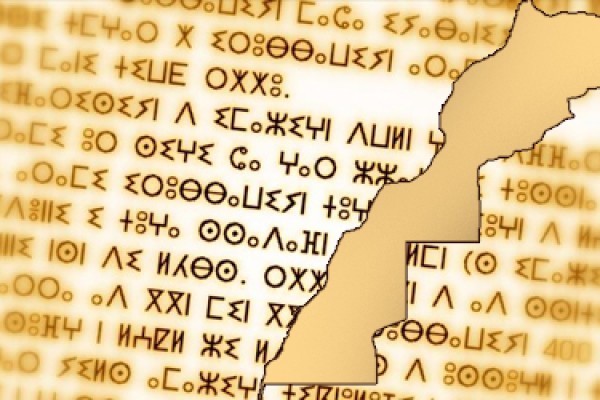
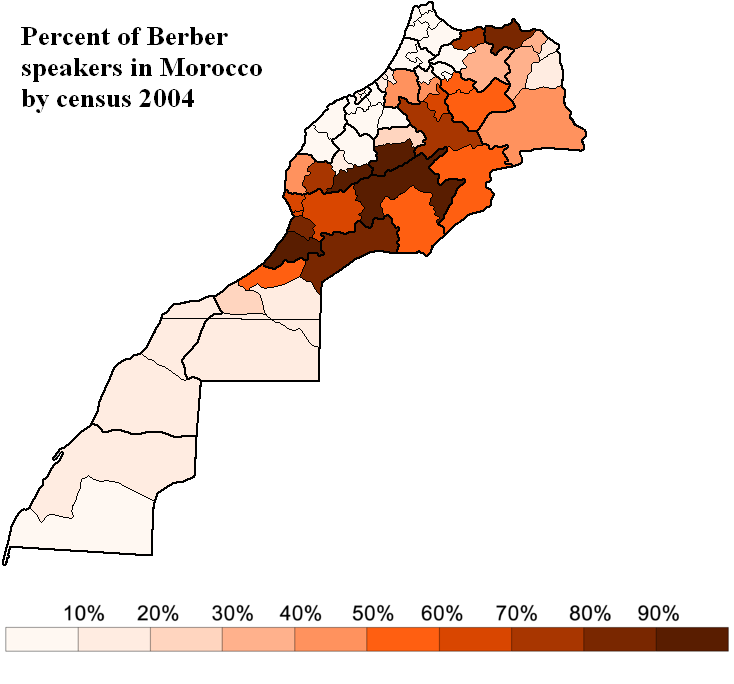
Furthermore, there are Amazigh languages spoken by the indigenous people of Morocco. The word “Berber” has been often used to refer to the Amazigh people, but some perceive it as derogatory term because it derives from barbarian, which was used by colonial powers when they first arrived in the country. However, “Amazigh” actually means “free and noble men,” an identity that continues to be a point of pride for many Moroccan Amazighen. While statistics on what percentage of Moroccans are of Amazigh background vary, a great majority of Moroccans claim Amazigh roots. There are three main dialects of Amazigh spoken in Morocco: Tirifit in the north, Tamazight in the center, and Tachelhit in the south of the country. The dialects that are closer in geographic proximity to each other can be understood by native Amazigh speakers. However, a native Tachelhit-speaker from Agadir will find it very difficult to understand a native-Tirifit speaker from Nador. While Amazigh languages may be transcribed in both Latin and Arabic characters, the ancient Tifinagh alphabet was standardized and officially recognized by Morocco in 2003. Through the efforts of some Amazigh nationalists, Tamazight was recognized as an official language in Morocco when the new constitution was passed by King Mohammed V in 2011. Tamazight is mostly spoken at home among family members and relatives. However, it has become increasingly present in Moroccan public spaces. For example, administrative buildings now provide signs translated in Tifinagh and Arabic scripts, Tamazight is taught at select public schools, and locals in predominantly-Amazigh cities like Agadir speak it casually amongst themselves.

Percent_of_Berber_speakers_in_Morocco_by_census_2004.png

While the colonial period officially ended in 1956 with the abolition of the French protectorate, traces of the colonial influence are still undeniably present in Moroccan society, especially when it comes to language. Following decades of French and Spanish influence in most of the country, the languages of colonial powers have made their way into almost all spheres of life. When colonial powers finally withdrew from the country, newly independent Moroccans found themselves inheriting colonial education systems and governmental structures. For this reason, French and, to a lesser degree, Spanish have left their mark on the Moroccan linguistic landscape. Spanish is widely understood and spoken in northern Morocco (and Dar Si Hmad’s hometown of Sidi Ifni). Places in the vicinity of Tangier and Tetouan have major Spanish-speaking populations, which is fueled by tourism from nearby Spain and the Spanish enclaves of Ceuta and Melilla. While Spanish is not spoken at home or enforced at school, you may find Moroccans speaking it with each other or tourists in the area.


French has a longer and more complex history in Morocco. Due to the French colonial influence in pre-state and newly independent government institutions, the French language has maintained a strong presence in Moroccan society. While Moroccans learn Arabic, most who pursue education beyond the primary level can speak French at least conversationally. By the time Moroccans reach the university level in the humanities, almost all of their coursework is likely to be in French. Many Moroccans believe that French language skills are necessary in order to progress professionally in the country.


Similarly, English is now starting to gain popularity in Morocco as a global language, especially in a country that aims to open itself up to international business. Interestingly enough, Moroccan youth also see learning English instead of French as an act of resistance to France’s cultural hegemony over Morocco. Nearly half of the Moroccan university students participating in Dar Si Hmad’s RISE program prefer English over French for professional communication.

As you can tell, the linguistic landscape of Morocco is as complex as it is diverse, mirroring the richness of Moroccan society. There is no doubt that many linguists are attracted to Morocco because of its unique diglossic situation in order to make sense of this complexity. Certainly, the country will never cease to inspire those who are willing to take the time to unpack its many layers.