Dar Si Hmad for Development, Education and Culture is an independent nonprofit organization founded in 2010 promoting local culture and sustainable initiatives through education and the integration of scientific ingenuity in Southwest Morocco. We operate North Africa's largest fog harvesting project, providing villages with access to potable water. Our Water School and Girls' E-Learning Programs build capacity in the Anti-Atlas Mountains. Through our Ethnographic Field School, researchers and students engage with local communities in Agadir, Sidi Ifni, and the rural Aït Baamrane region for meaningful cross-cultural exchange.

Showing posts with label CELAR. Show all posts

Wednesday, February 3, 2021

Dar Si Hmad January 2021 Highlights

Should you have guessed that l’3mART n’Id Yennayer is what made the highlight of Dar Si Hmad in January 2021, then you are right!! In addition to this inspiring celebration, other events took place this January in DSH and find them below.

You’re out of the loop? No worries! read through this article to get all the information!


So, let us start with this special event that took place in Dar Si Hmad at the beginning of January. We named it L’3mART, an Amazigh word that signifies “presence, assembly, charisma or company.” A two-day webinar discussing the history and the symbolism of the new Amazigh Year celebration  called Id Yennayer by North Africans. The event included also a culinary component, performance by some artists; everyone enriching this event in a special way.

Watching the recording of these insightful webinars is like a door leading to an inspiring cultural celebration. Click on the following hyperlinks to take you straight to them!

Day 1 Webinar   - Day 2 Webinar

A picture containing text, living, table, family

Description automatically generated

Before the diffusion of L’3mART, Dr. Jamila Bargach, the E.D of Dar Si Hmad, signed a partnership with a third space named Espace Hashtag, to introduce our organization to their followers in a live video on Instagram. Espace Hahstag is an open space that welcomes and encourages young people to meet the space’s mission of  promoting entrepreneurship, engage in social economy, and create networking possibilities for its members -- and of course all of it in a fun and friendly atmosphere. 
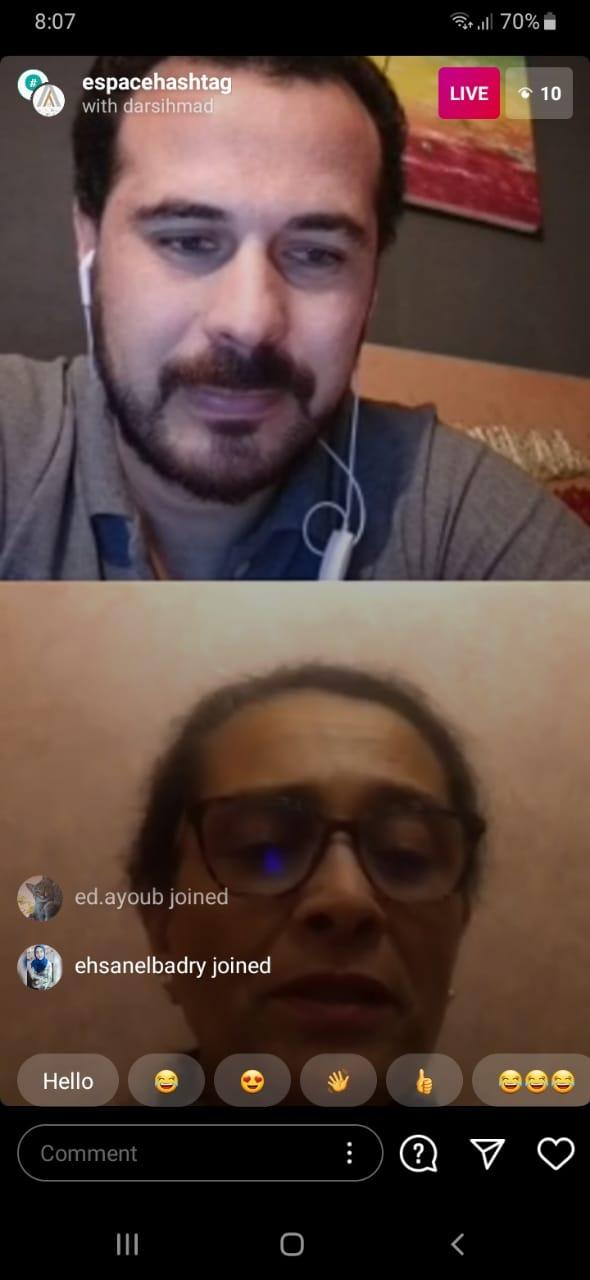
The live idea was part of the communications plans of Espace Hashtag to have also celebrated L’3mART distantly with us from their center. But that wasn’t the only thing; on its end Dar Si Hmad released 8 videos with powerful Amazigh sayings that prepared the ground for the upcoming webinar’s theme. To watch them, check our Youtube Playlist entitled L’3mART !

Much logistical planning was  going on behind the scenes to make this event successful.

Enough talking now about L’3mART and let us tell you about the other highlights of January 2020 as we got back into the swing of things!

Again, Dar Si Hmad has welcomed a new employee to the organization. Leo, who's very special and resembles none of the staff. It is a German shepherd to be the guardian of our pedagogical farm and all the precious organic goods that grow on it. Unlike its fellow humans, Leo doesn’t need to learn the ropes, he came fully prepared for his new job position.

Two students and volunteers also joined Dar Si Hmad this month. Their names are Delana Sobhani and Jack Carew. They are studying Darija, Classical Arabic and Tamazight through our CELAR program, but also delivering English language lessons to our staff. Delana and Jack are offering these volunteering hours during their research period that is part of the US Fulbright program.

And finally come the in-person meetings with different state institutions to better serve our developmental and educational services, projects and programs.
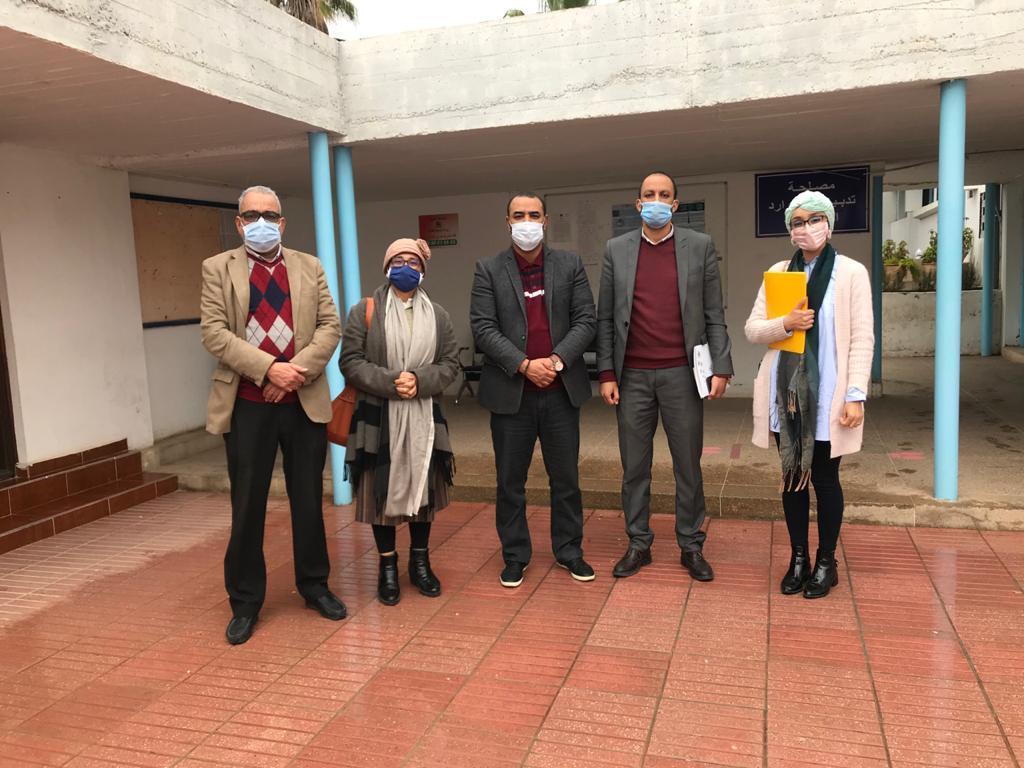
On the 6th of January, a meeting was held at the Regional Directorate of the Ministry of Education of Agadir Ida Outanane Province. Dr. Jamila Bargach and Dar Si Hmad’s office manager Samira Arjdal discussed the terms of the partnership agreement to be held between the two parties in the near future. The core of which is developing educational programs for the benefit of middle school and high school students in the province.
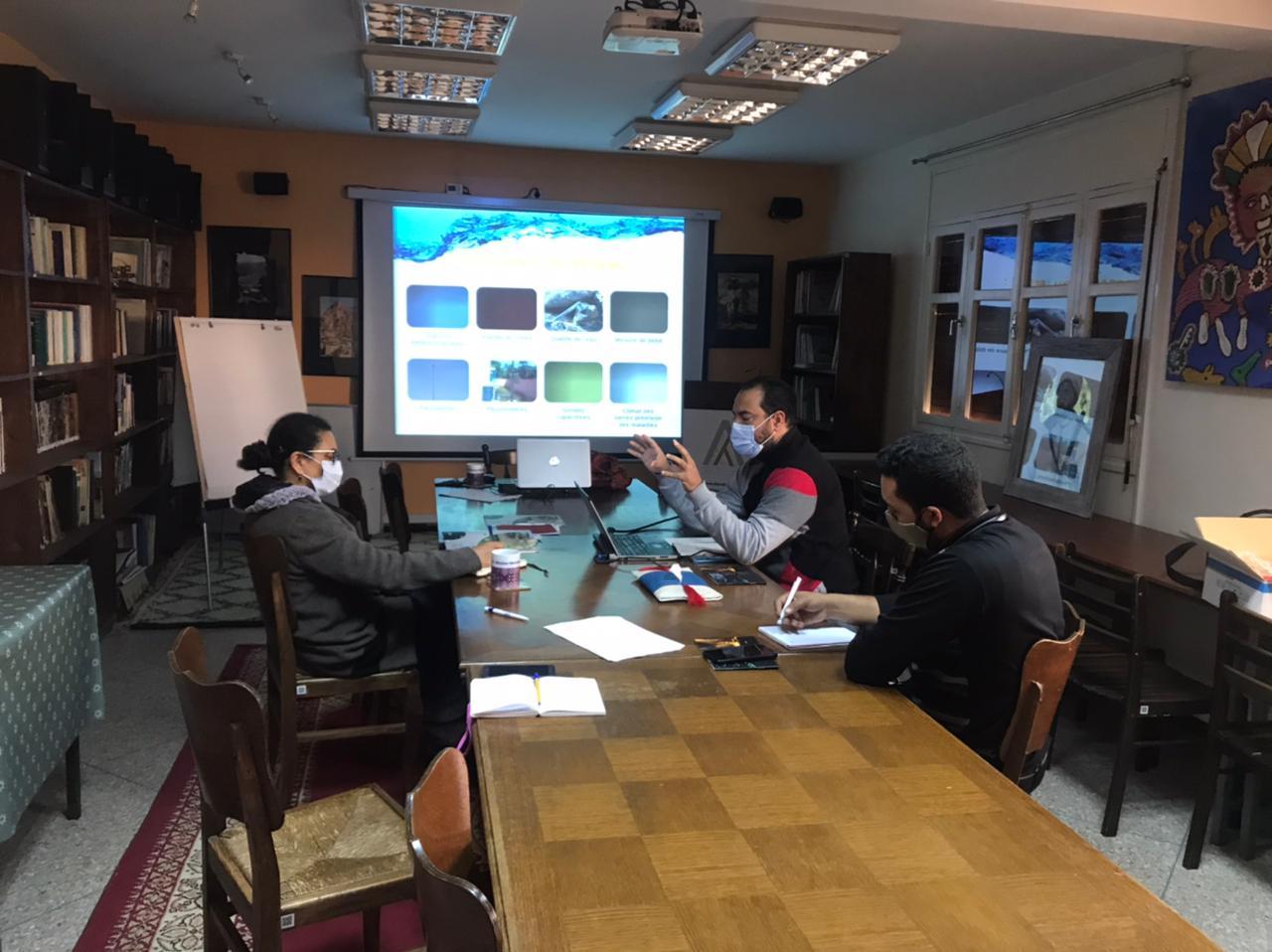
On the 6th of January, a meeting was held at the Regional Directorate of the Ministry of Education of Agadir Ida Outanane Province. Dr. Jamila Bargach and Dar Si Hmad’s office manager Samira Arjdal discussed the terms of the partnership agreement to be held between the two parties in the near future. The core of which is developing educational programs for the benefit of middle school and high school students in the province.

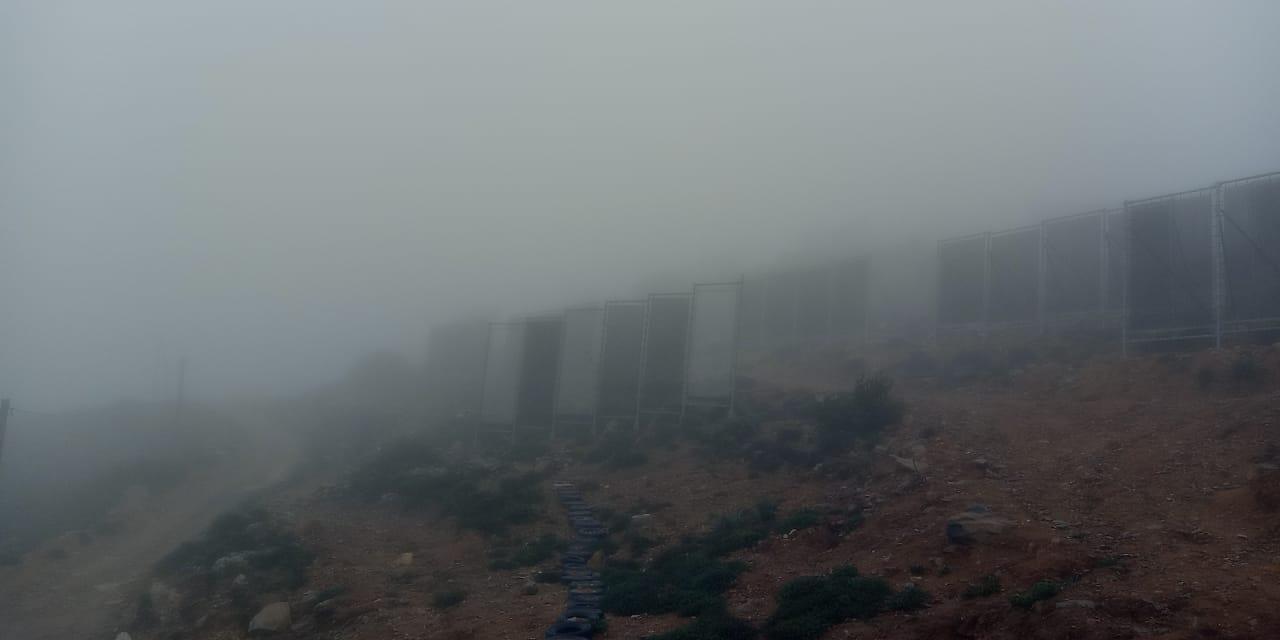
And our all-time projects continue despite all the unusual conditions relating to the pandemic.

The fog harvesting project
A picture containing outdoor, sky, nature, dirt

Description automatically generated

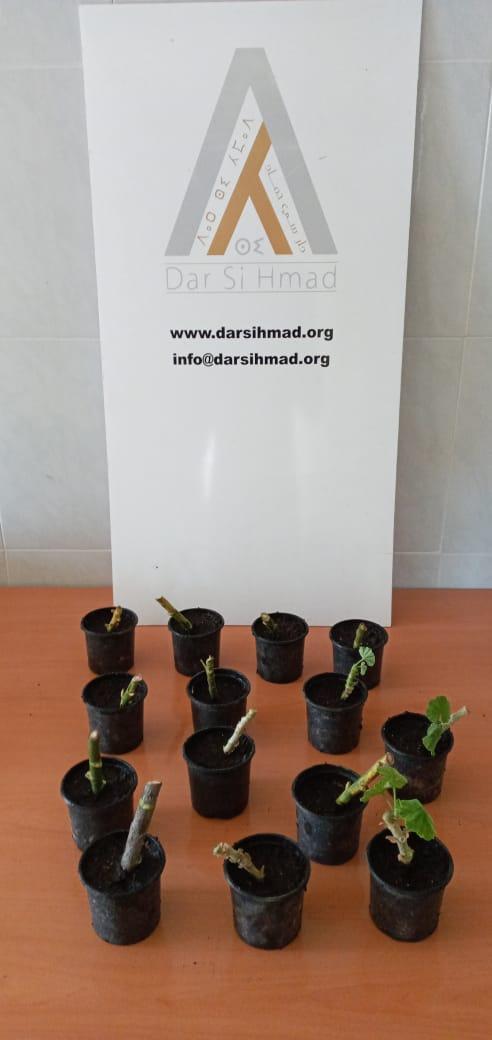
Botany tests in Foundation Si Hmad Derhem for Agdal Id-Aachour Pedagogical Farm
A picture containing text, wall

Description automatically generated

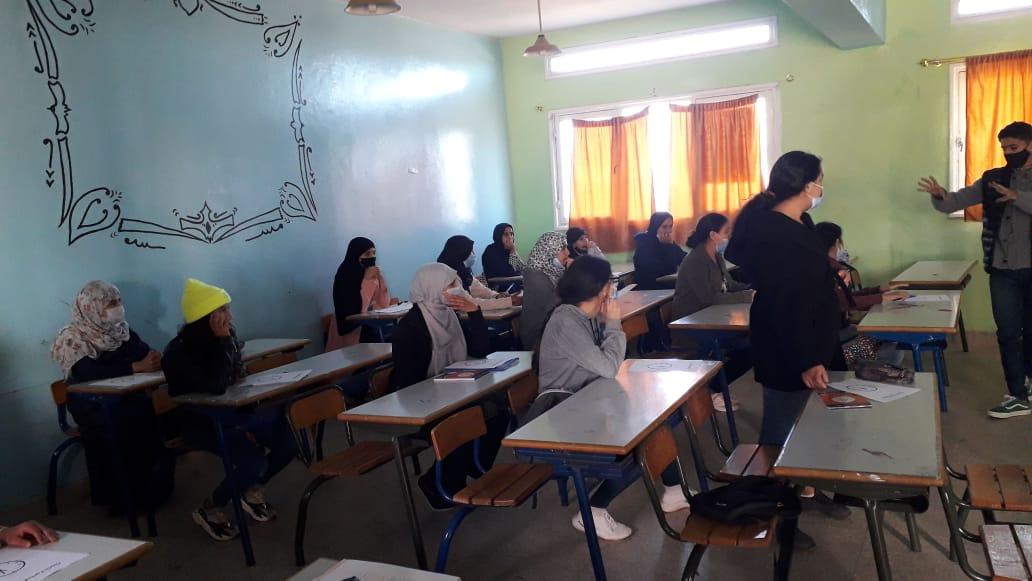
 Grace Online English language lessons


Friday, September 20, 2019

From The Logbook: Employees of DSH Tell their Stories/ Salwa El Haouti, Communication Officer


Learning the tools of the Trade


It’s been only two months that I am the communication officer of Dar Si Hmad and yet, I have already had to face many challenges. When I first started in the organization, I was so eager to learn,  to improve and to put to  practice all the communicational skills I had recently acquired through the many courses I completed whether online or at the university, but the priority is that I had to work with a PhD candidate, a CELAR student needing assistance for the research she was conducting here in Morocco. 

Though the large umbrella of this research was on climate change and water scarcity in the rural Southwest region of Morocco, her specific questions focused primarily on how this climate change impacts the health and lives of underserved marginalized women within these areas of the country. This is a new field of research, still emerging and research is being conducted in different disciplines. The challenge was basically a linguistic one, most of the published material being either in French  or in Arabic and not in English; this is where my role came in.

I am a native speaker of Arabic and French languages, and my role was to assist her in completing a literature review, and finding what is emerging as the most important topics within the field; this task was surely stimulating but also very demanding for me. I felt I had to shoulder the new responsibility but I also was apprehensive that my work would not meet the demand and expectation of the researcher. Documents, both in French and Arabic are easily available, but providing a faithful and accurate translation for their content is where the challenge lay. Working on one single article of some 7 pages would generally take 3 days of intense work to find out the accurate and nuanced translation of the jargon it contained and its general message; we were meeting daily for the entire month of July. This task demanded rigor and discipline and even when stressful at times, it proved to be also one that benefited me greatly and widened my knowledge horizon.

Now and following the completion of this demanding task, I can focus on the communication matters and the future RISE project I am designing with the team’s help. The days spent in the organization go by very fast to the extent I did not  realize the start of the new academic year. as I am now pursuing my Masters’ Degree at Ibn Zohr university. I am full of emotions, happy, excited, fearful, but always hopeful.  

Friday, August 9, 2019

Discovering the Moroccan Language Varieties

Written by Lahcen Lqoul
Lahcen Lqoul is the teacher of (Tashlhet) Tamazight, Darija and Standard Arabic in Dar Si Hmad's CELAR program.

     I am an educator, translator and language and cross-culture facilitator. I have a Master’s degree in Comparative Studies in Literature. I teach undergraduate courses at the university of Arts and Languages, Ait Mloul (the larger Agadir Region). I also worked with the Peace Corps as a language and cross-culture facilitator, teaching Darija and introducing volunteers to Moroccan culture. I am currently occupying the same position at Dar Si Hmad, an NGO based in Sidi Ifni with an annex in Agadir.
    My teaching experience with Dar Si Hmad started in 2018. When I was given the opportunity to collaborate with DSH, I considered it as a means to develop several inter/intrapersonal skills in terms of communication, cultural exchange and professionalism. At the end, what I achieved has, surprisingly, exceeded all my expectations.
    First, I started teaching classes in darija (Moroccan Arabic). Then I taught (Tashlhet) Tamazight. After that I taught Standard Arabic. To be able to manage and maintain teaching these three languages, DSH developed a language program called CELAR. This program offers courses in the mentioned languages. In order to learn the language in a relatively short period of time, these courses are most of the time intensive, 6 to 10 hours a week. DSH made this teaching and learning process more convenient. They provided me with a suitable working environment and the needed teaching materials, such as textbooks, equipment and so much care.
      During the period in which I have been working for DSH, I met and taught many interesting students from all over the US. There were Fulbright researchers in different fields of research, English teaching assistant, students in internship in DSH and some of DSH staff. Due to various interests in learning these languages, I taught these three languages for different purposes: for general communication in everyday life like shopping, transportation and so on; for research like writing and translating questionnaires and interviews with or for local people in their communities. In these courses, there are students who started knowing one word and ended up in an intermediate level; there are others who brushed up on one of the languages I mentioned and moved to an upper level. I also taught groups of students from other universities and organizations who came to learn about Moroccan culture and language. I taught students from (WGEI) Women's Global Empowerment Initiative, students from Quinnipiac University and students from Lewis and Clark University. These students showed great interest in learning the languages we use in Morocco and to learn about Moroccan culture in general. And that motivated me a lot to do my best and for me to learn more about my multiple cultures.
     Working with DSH gave me the chance to develop and sharpen my teaching, social, and personal skills. They also helped me to discover other personal and professional teaching skills. For me, Dar Si Hmad is a cross-cultural zone where different cultures meet and deep exchange happens. I met different people from different countries and different backgrounds; people from Morocco, US, Ghana, and Tunisia. Working with these people was fun. It was a fruitful and a professional and resourceful experience.