
ّWhen RISE Eco Mill began four weeks ago, the student beneficiaries held seeds of ideas to the environmental enterprises they hoped to carry out, but lacked some of the key tools and training to implement their ideas. Fortunately, the first two workshops of this rendition of RISE have already imparted significant skills to the student beneficiaries.
The first session took place on Saturday, 10 April at the Faculty of Arts and Humanities of Ibn Zohr University. It combined an introductory session and a training session. The session started first with welcoming remarks from the Executive Director of Dar Si Hmad for Development, Education, and Culture, Madame Jamila Bargach who emphasized on the importance of youth empowerment for the development of communities, which is one of the main goals of RISE program. After that, the communication manager of the association presented Dar Si Hmad’s activities and projects to familiarize the participants with the environmental, educational, and social activities that we are doing. Finally, the project coordinator gave an overview of the new rise edition and reminded the participants with some ground rules to assure that the program is progressing and meeting its objectives. Right after that Professor Afafe El Amrani El Hassani, an employment counselor, social actor, and professional and student seminar leader, delivered the first training session on Problem Framing & Needs Analysis.
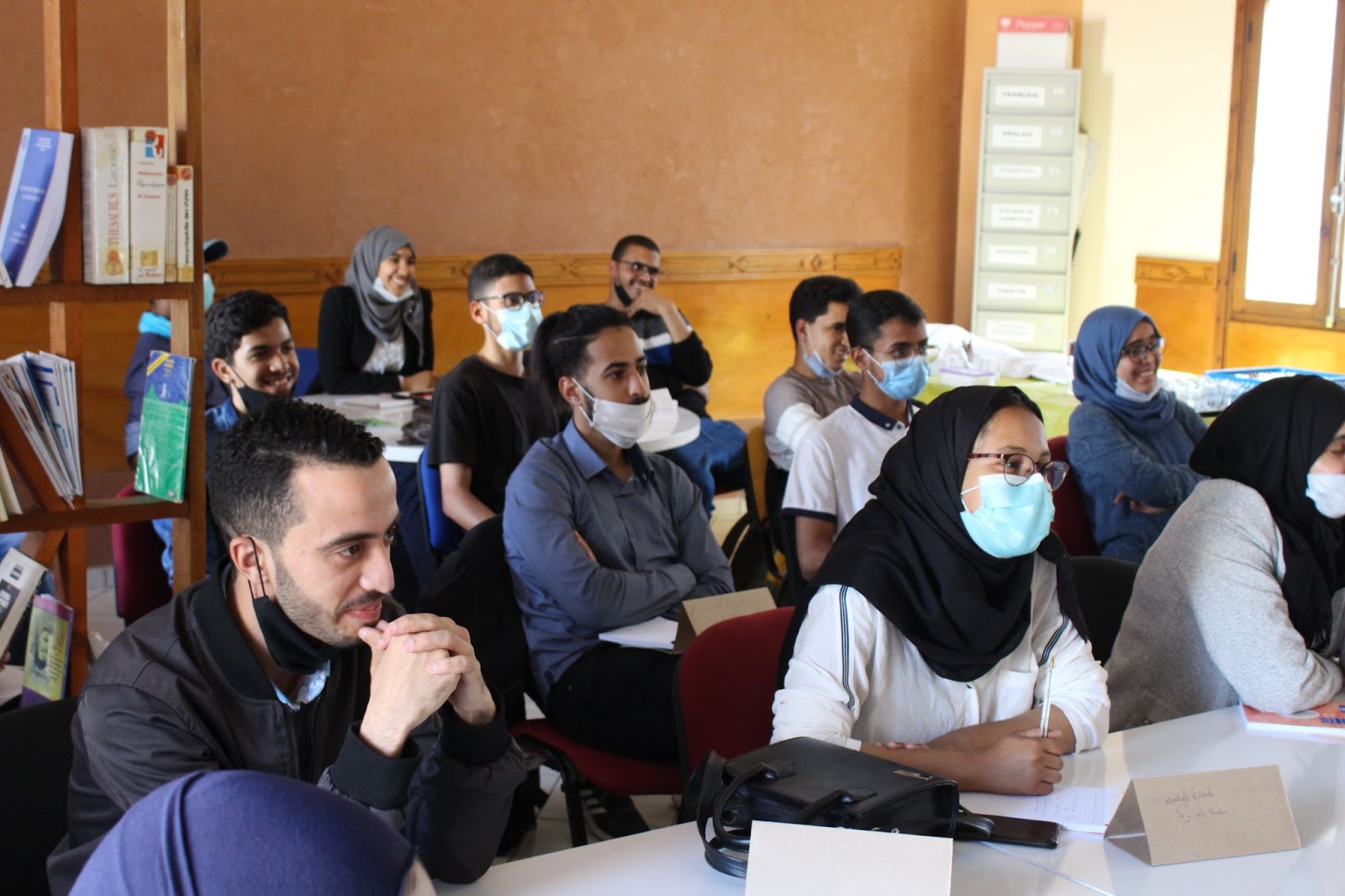
Professor El Hassani began the session by laying out the three primary functions of project management: planning each task, executing and implementing various operative items, and the follow-up and evaluation of the project’s execution. Presenting the key features of project management in these three discrete steps allowed the beneficiaries to begin to think of their environmental ideas within the framework of a process; that is, by beginning to identify and organize the tasks that must be completed to bring their ideas to reality. The beneficiaries brought their projects one step closer to realization.
Next, Professor El Hassani emphasized the importance of planning each step of the project before beginning the actual implementation of each step. One of the first steps necessary in this planning process is to determine one’s own entrepreneur profile. Professor El Hassani asked the beneficiaries, “Who are you?” and “How does your story and your unique background fit into the realization of this entrepreneurial project?” These questions will prove important when the beneficiaries pitch their projects to potential funders, as a compelling story will help to sell their projects.
This first session of RISE also covered the importance of working with a team that manages the various project tasks. After defining the list of tasks that must be completed, beneficiaries can assign each task to members of their teams, and thus ensure that responsibilities are equitably distributed. Professor El Hassani instructed beneficiaries to examine a list of key elements to each of their projects before beginning to implement: utility, scope, success criteria, milestones, actions, results, team, stakeholders, users, resources, constraints, and risks. By defining each of these terms, beneficiaries will create a set of guidelines with which to effectively carry out their projects.
Next, the beneficiaries identified the duration of their projects, or the timeline over which they hope to bring their ideas to reality. The trainer also insisted that beneficiaries analyze the external environment through the use of the PESTEL analysis, as it is more or less exhaustive. Alternatively, she suggested that beneficiaries can use the tree method, through which they can determine the existing problems that their project can solve and the multiple solutions they could suggest to these problems. Finally, she invited them to perform a swot analysis of themselves to see how ready they are to venture into creating a project.

The second session of RISE ECO Mill, Ideation, was presented by Abdellah Bourti, a coach and trainer in entrepreneurship, Chief Incubation and Acceleration officer at Univers Startup Incubator, entrepreneur, state engineer in IT, and Graduate of the Mohammadia School of Engineers. While all other sessions of RISE will continue to be offered in person, this session was offered online via Zoom and Facebook Live on Saturday, 17 April. He structured the session around teaching the Design Thinking approach. Design Thinking, or a manner of thinking that aids one in project development, is structured around five key steps: Empathize, Define, Ideate, Prototype, and Test. Using these five steps, beneficiaries were able to identify key needs in their communities and ideate environmental solutions to address those needs. Furthermore, Mr. Bourti presented strategies for collecting customer insights that beneficiaries could use to identify entrepreneurship opportunities and to evaluate the efficacy of their products. Once a beneficiary identifies the most pressing community needs, one can design and develop entrepreneurial solutions to address those needs.
Another strategy for identifying key community needs is to develop a “Proto-persona,” or the personification of a typical customer. By defining this individual’s behaviors, pain points, objectives, and desires, the beneficiary can develop a solution or product that best suits them. Along with helping to ideate an effective solution, this technique will assist with marketing and community outreach further along in the process, as each beneficiary has already thought of principal groups they will target once they have realized their idea.
After the first two workshops of RISE ECO Mill, our beneficiaries have already strengthened their project management and development skills. Beyond building upon their existing skills and ideas, they have learned new frameworks for approaching problems that will prove useful in developing their project ideas within RISE, and serve them in the future as young professionals. We look forward to welcoming our beneficiaries to our upcoming RISE ECO Mill workshops: Prototyping and Testing.

